






These Related Episodes
Featuring
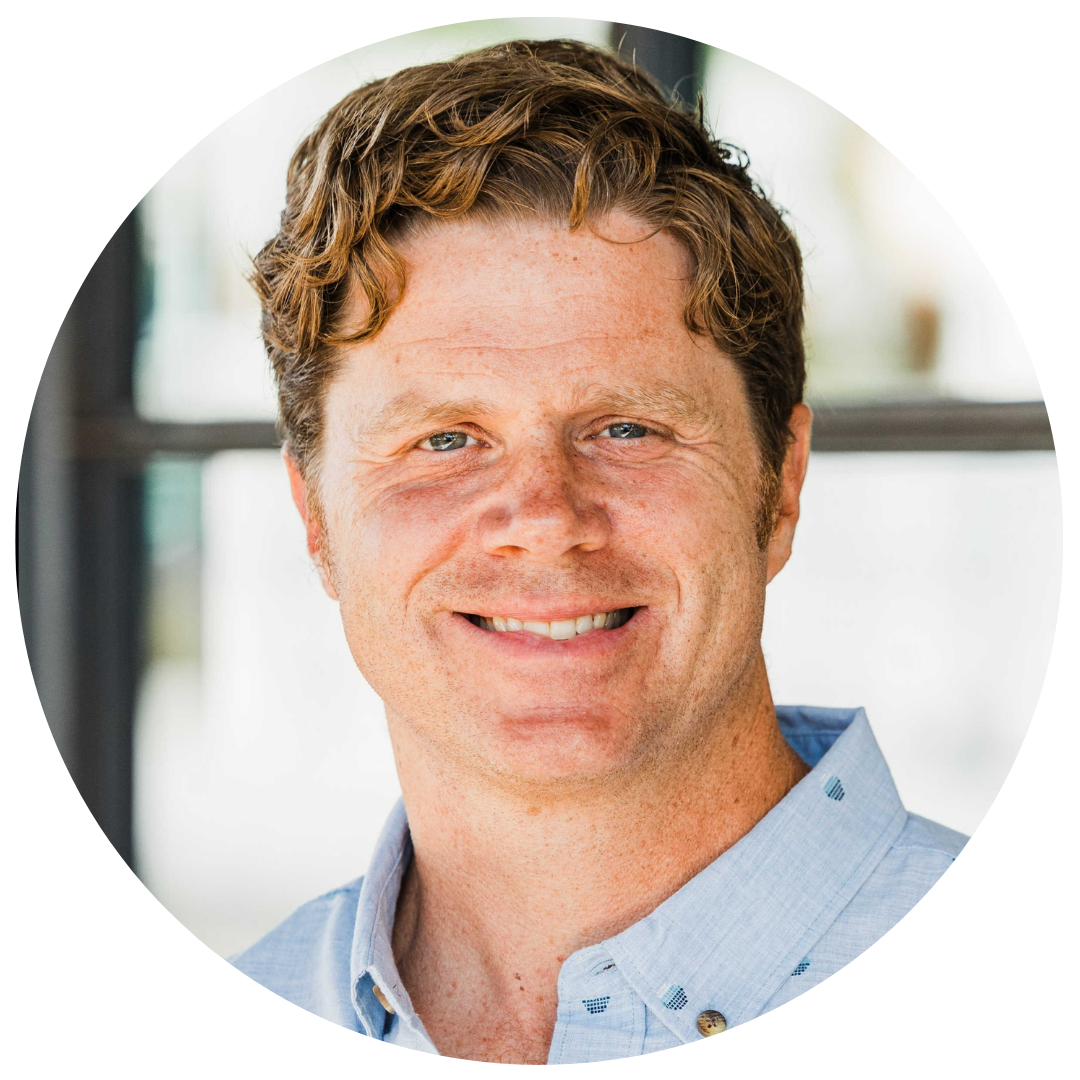
Scott Frank, CFA, CFP®
Stone Steps Financial
In this episode of Behind the Advisor, Scott Frank, CFA, CFP®, founder of Stone Steps Financial, returns nearly a decade after his first podcast appearance to reflect on what life and business look like long after the launch phase. When Scott first joined the podcast in 2016, he was building from scratch, serving around 22 clients, and focused on creating enough income and flexibility for his family. Today, Stone Steps Financial has grown into a five-person firm serving more than 90 households, with a clearer niche, a stronger planning philosophy, and a very different definition of success.
Scott shares how reaching his original goals forced him to confront a new question: what comes next when the thing you once dreamed about becomes your everyday reality? His answer has evolved from simply growing the firm to being more intentional about where he spends his time, energy, talent, and money. That shift has shaped the next chapter of Stone Steps, from building a scalable “diamond team” to focusing more deeply on tech and biotech professionals, stock compensation, cash flow planning, and financial life planning.
For advisors, Scott’s story offers a candid look at what 10+ years inside XYPN can actually look like: not a straight line, but an ongoing process of adapting, refining, and growing into the business you built. From adopting the Kinder life planning process to rethinking his role from “hero” to guide, Scott shows how the work of building a lasting firm is less about having every answer and more about creating the space, systems, and team to help clients live their great lives.
.png?width=672&height=168&name=XYPN%20Radio%20Blog%20signature%20(1).png)
Listen to the Full Interview:
Watch the Full Interview:
What You'll Learn from This Episode:
- How Scott's definition of success has evolved over more than a decade of firm ownership
- What it looks like to grow from 22 clients to a five-person firm serving 90+ households
- Why reaching your original business goals often creates new questions about purpose and fulfillment
- How narrowing a niche can strengthen both your client experience and firm growth
- The role that stock compensation, cash flow planning, and financial life planning play in serving tech and biotech professionals
- What Scott learned from implementing the Kinder Life Planning process in his firm
- How shifting from being the "hero" to being a guide can transform advisor-client relationships
- Why building the right team and systems matters more than trying to do everything yourself
- The lessons, challenges, and opportunities that come with spending 10+ years as an XYPN member
- How to create a business that continues to evolve alongside your life, values, and goals
Featured on the Show:
- Scott Frank was on XYPN Radio back in 2016 to talk about ‘What It Takes to Start a Firm From Scratch’.
This Episode Is Sponsored By:
Read the Transcript Below:
Alan: Welcome to "Behind the Advisor" with XYPN, your behind-the-scenes look at the challenges and victories fee-only advisors encounter as they launch, run, and grow their independent firms. Join us for a deep dive into real-life stories, frontline insights, and the actionable strategies it takes to build a thriving, purpose-driven firm on your terms.
Today, we are rejoined by Scott Frank, founder of Stone Steps Financial, who first appeared on XYPN Radio back in 2016 on episode 49 to talk about what it took to start a firm from scratch. A decade later, we're not here to remake that episode. Instead, we're revisiting Scott's story to just explore what's changed, his business, his niche, his mindset, and how being part of XYPN over the long haul has helped shape that evolution.
This conversation's really about longevity, adaptation, and what real advisors actually look like after the launch phase fades. Scott, welcome back to the show
Scott: Thanks for having me, man. Yeah, it's only been a decade
Alan: only been a decade. What has changed? it's, I've got a bunch more kids, a little more gray hair, a shorter beard. it's
Scott: a lot has changed. Yes. Yes. We're, yeah, we're-- Our kids are definitely older and, we- we're both hopefully a little wiser with all the experience we've had in 10 years.
Alan: One would hope. Yeah. listeners, if you want to go hear Scott's story, career story, how he decided to launch a firm, what that first year looked like, you can go to XYPlanningNetwork.com/49, and you can go listen to that. But, take us back, we're, sitting here 10 years ago.
Can you remind me where you were at with the firm in terms of, number of clients, like sort of-- If you had-- I don't remember you really having a specific niche at that time
Scott: This is so good. Yeah, I did not have a s- a niche at that time. Let me go back and see if I can find it. I have it on a one-page plan what my total clients were. Oh, here I can go 2017. Let's see. So I would've had about 22 clients at the end of 2016,
Alan: Okay
Scott: and grew from there.
Alan: 'Cause you really came out of the gate hot. Like that first year was fast for you
Scott: Yeah, my average revenue, this is gonna make people laugh 'cause we've told everyone to charge way more, but my average revenue per client end of 2017 was $3,700.
Alan: clients. And then where is the firm at today?
Scott: So the firm today is we have just over 90 households, about 1.2 million, 1.15 million, somewhere in there of revenue, about 130 million of, would be considered like assets under management.
Alan: That is awesome. if nothing else, congratulations. that's, Thanks I'm gonna have to pull up my notes. I, saw this quote and I, wanna start using it. It is, I'm not sure how to pronounce his last name, Miles Adco- Adcox? Adox? And he says, "What a privilege to be tired from the work you once begged the univer- verse for.
What a privilege to be overwhelmed by growth you used to dream about. What a privilege to be challenged by a life you created on purpose, and what a privilege to outgrow the things you used to settle for."
Scott: Oh yeah, there's so much truth to
Alan: I just, yeah, I just... Man, and, had we been sitting here 10 years ago having this conversation, that was not what was on my mind.
It's all about like, where do we wanna go and how do we wanna grow and all of that. So
Scott: For me back then, I remember exactly what it was I wanted to grow our firm so that my wife didn't have to work if she didn't want to, and that was really her biggest dream was to be a stay-at-home mom. a lot-- oftentimes, the way that we work with clients all the time, and I think the listeners at home should think of this for themselves because I think they use it as well, is that, people come see us as advisors thinking they're here to talk about one thing, money.
But they're really here to talk about four things that they get to invest, and that's time, energy, talent, and money, 'cause they're all interchangeable, right? And for my wife, she wanted to use all of her time and energy and talent really to focus on being a mom. She didn't want to have to make money to do that, and you obviously don't sadly get paid to do that.
too bad. It'd be nice if you did. But, that was the main goal was just to get it to where she could be free. I thought we would hit that in, three years. when did we start? 2015? Maybe I even said we'd do it in two years. I was overly ambitious. she re-retired. She still does consulting work, but stopped working full-time in 2019.
Alan: Okay. So it took about four years and, going into COVID even.
Scott: Yeah
Alan: Yeah, I guess how have you... okay, so that was 10 years ago, the goal. What's the goal today? Like, when you think about, what do you, why, do you show up every day at this point?
Scott: So I'll tell you, I got a little ungrounded, when I hit our original goal because we all talk about, especially in the groups of XYPN, "I'm leaving 'cause I wanna have enough and I know what I wanna do." And, you wrap your mind around what that is, and for me it was hitting this income number, and once I hit it, I could just be like, "I don't have to do anything else."
But I became super ungrounded because all of a sudden I had all this extra time and I don't wanna take 200 days off a year, right? I actually enjoy work. So it took me a while to recognize some therapy along the way, maybe little bit of a, midlife crisis. They're all-- everyone gets to do one.
Yours is coming, sir. but basically what it came down to was, oh look, the things that I want to spend my time, energy, and talent on, I can still do that and it's okay to make more money.
That was a mental block I had to overcome
Alan: Yeah, the shifting goalposts. you know, I mean, we learn about this in CFP school. We do this with clients every day that, and I think listeners know the statistics, like if you ask somebody with a million dollars what it takes for them to be comfortable, it's two million. If you ask somebody with 100 million, it's 200 million.
we do the same thing as business owners, where we set this goal and then we achieve it, and the goalposts are constantly moving. So I guess, how have you dealt with the moving goalposts of the firm? and do you feel like another change is coming, or are you pretty settled on, how you've structured the goals for the firm at this point?
Scott: it is. so to me, where I, landed, what I'm trying to get at for you, the point I was making there, is that I realized money isn't the goal. The goal is where do I spend my time, energy, and talent in my life at this point, right? And so at this point, being a dad and coaching basketball for seven-year-olds, which is crazy, and, doing thing-- and then being, there for them for all the events that they have, that is number one for me.
Then it's running the business, right? So I'm not looking to go put my f- pedal to the metal and go grow, 10X in three years, But I do have a great deal of time, energy, and talent that I can deploy at work and still do all the things I wanna do at home and with friends and with family. And so within that frame, what we're doing is we're building one diamond team here at Stone Steps currently.
so we already have it. It's already full with the three people that need to be on that team. the next thing that we're doing is we're targeting, we have shifted for years to working more so with tech and biotech executives, so we work directly with them. I did a really poor job of, using, podcasting to generate business.
My friend who I co-hosted my podcast with for years did a really great job with that. he now has a multi-billion dollar RIA called Root Financial. he's just down the street about eight blocks. so now what we're gonna do is we're gonna target, a very specific focused, podcast/YouTube channel for that cohort to start spinning up the marketing on it more to go fill up our team to where we have, 160 to 200 clients operating on that team.
and then we'll look to add other teams as time moves forward. That's where we're headed. I think the other big thing to think of there for myself is I, in 2016, was still in discovery of not understanding, why people weren't following through on the financial plans that I was giving them. and actually it was you that turned me on to, this guy George Kinder and his three questions.
and I actually went and took that training in 2017. since 2019 I've been teaching it. I was just in Hana teaching, a few XYPN members actually, and others, how to basically actively listen with empathy.
Alan: So I
Scott: so use-- I'm just gonna c- co- coalesce that all together. So what we're looking at doing now, the next phase of Stone Steps is I wanna build a firm in which we have a media channel that's for a specific niche of client, that's gonna have a specific brand name, and so we're starting that now.
But they're eventually gonna filter to Stone Steps, where a team that's gonna focus with tech folks is gonna be there. As we do that and get really good at it, I wanna turn on different channels, like the cereal aisle of your, grocery store. what was your favorite cereal growing up, Alan?
Alan: Fruity Pebbles
Scott: Who makes it?
Alan: Gosh, couldn't tell you
Scott: that's the whole point. I wanna make media brands that are designed to get people excited about planning and helping show them how to solve their problems. They're gonna come to Stone Steps, but we're General Mills. They don't care who we are. They care about the brands above. But it's all gonna be financial life planning centric, so everyone's gonna have a kinder registered life planner, advisor doing that work for them to help them really full- fully step into their authentic life, and we're gonna help them align their money with it.
That's where we're going.
Alan: if we go back 10 years, you, again, you really hadn't discovered this niche, you hadn't discovered this process of doing what I, call real financial planning,
Scott: Yes. And that's the name of our old podcast is Real Financial Planning. Yes
Alan: m- I would say most advisors view just leveraging, the Kinder, the three questions and life planning and all that, like that is enough of a niche, 'cause that's, that i- is solving like an incredible challenge that, that every advisor faces. But you're going one step further and, taking that and applying it to a specific profession, what is-- Or industry. what's taking you into the industry versus staying more
general?
Scott: who showed up, right? It's who shows up. They have complexity. They need help. The thing about the work with Kinder, and there's other-- And the Kinder works on a spectrum of life planning, financial life planning, if that's the word, right? So there's like Kinder, Money Quotient, oh my gosh, the Geometric Wealth guy, Brian, I'm forgetting his name off the top of my head.
He's a such a good guy. all kind-- There's a whole spectrum, right? You can learn about it at, Golden State if you want. but here's the deal. Caltech researcher last year goes and figures out... You remember the, the book by Daniel Kahneman about thinking fast, thinking slow?
Alan: Yep
Scott: " Think Fast, Think Slow"?
So it's system one and system two, right? System one, our reptilian brain. System two, our prefrontal cortex. System two, that's the one that all of us as advisors think we're u- our clients are using and we're using. We only use it 5% of the time. 95% of the time we run on the reptile brain. Okay, but here's the fascinating point.
System two frontal cortex runs at 10 bits per second
That's slower than the original Nintendo How fast do you think System 1 runs?
Alan: Oh gosh. No tell-- I have no idea.
Scott: Just guess
Alan: 100
Scott: 100 bits per second. Cool. And everyone else can make their guess too. The answer is a billion bits per second. It's 100 million times faster. The work that we're doing with Kinder is we're getting advisors to help their clients use System 1 to their benefit
Alan: So how are you-- So using system one to their benefit? And system one is the s-
Scott: the reptilian brain, the body, it's where all emotion happens. It's where we think that we operate by being these really smart people who are thinking all the time, but thinking is running 100 million times slower than our other system. So like you can't-- It, doesn't really compete. What it ends up doing in the end is it backs up the choices that our gut or our bra- our heart wants to make
Alan: So are you finding that clients are reaching out knowing that you have this process and they're looking for this type of process? Okay
Scott: No. What they show up for is the same reason everyone shows up to every other office. There's some pain point that makes them go, "It's time. My cash flow was off. I have this big stock comp thing coming up and I don't know what to do. I don't wanna make a mistake." we actually get the core clients, we've had on more than one occasion, their parents or grandparents come to us after the fact because we've done all of this work about who are the people.
They see that effect in their lives, and then they go the sandwich generation goes "I don't wanna have to deal with the finances of my parents. Can you be in charge of their stuff?" So like where our business is literally yelling about at every like big function, I'm just thinking of any custodial, thing you go to, they're gonna talk about the great wealth transfer that's coming.
I'm like, "Dude, just go do great work for your clients and let them know you can work with their parents."
Alan: I guess either way you're positioned for the great wealth transfer that may or may not happen, but,
uh-
Scott: then, you're literally holding onto the wealth and you're already managing the wealth of the next generation. You're good
Alan: So will you work with a client that comes in and says, "Hey, I have this issue, and yeah, that touchy-feely stuff sounds great, but, not for me"?
Scott: Yeah, but I meet them where they are, 'cause here's what I do. W- first of all, we never talk about it as touchy-feely. All that we do at first, Alan, is I'm just like, "Hey, Alan, it's really nice to meet you. what brings you here today?" And what are you gonna do? You're gonna list off all the financial stuff on your brain 'cause you're talking to a financial professional, right? And then eventually I'm gonna be like, "Alan, we help clients with all of those things all the time. You're in the right place." one of the things that we realize is that money is just a tool. And so if we, think of it that way, what are the essential elements in your life for you to live a great life? And you just-- Everyone wants to talk about themselves and their own life. It's very rare to have someone show up and be like, "I don't wanna talk about how I want my life to be." And if they push back on it a little bit, I'll just be like, the reason I ask, Alan, is because I would hate to put the ladder against the wrong wall and have you climb."
Alan: that's a good metaphor
Scott: We're, building a plan for them to-- Every-- Finance is really all about helping clients create whatever version of freedom they want in their life, and everyone's answer is different. And you could have two-- You could put me, the advisor, with what I just told you I have in revenue, next to another advisor who's been in business the same amount of time with the same amount of revenue, and our plans are gonna end up being different we want different things.
If you don't know what your client wants, how are you doing a good job for them?
Alan: So I am the client of an advisor, and sometimes I think I'm his worst client, because of my entrepreneurial, addiction, if you will. it sounds so simple to say "Yeah, we need to know what a client wants and then, we gotta put the ladder against the right wall," but that is, unbelievably challenging, and again, it's this, constantly moving target.
So how are you helping clients? it's easy to come up with an answer. The question is, is it the real answer? Is it really what-- going to be the filter through which you make decisions? Like, how do you help clients actually get there?
Scott: I love that because what you do is you help them paint a picture of them going there in the future, looking back on it, having done it. Because System 1 operates on emotion, right? emotion equals energy in motion. You want people to move on stuff, get them excited about it.
So once we give you-- paint the picture of where you wanna go, then we're gonna look at what could possibly get in your way. You'll know what things are possible and not possible. And then the real next step is, what's the next actionable step you can take to see if it's the right path for you? If it's a huge change you wanna have in your life, give you an example, this-- 'cause this just came to fruition.
Worked with clients, at a, tech firm up in Pacific Northwest area. Super nice couple, kids are through college, paid off the house. They're to the point where like they could just be all done if they wanna be, but they also have this longing in their life to have a second home in Southern California so that they can go enjoy the sun when the Pacific Northwest is not so sunny, shall we say?
So that's a big change for them, and it would ch- it would make it so that when you look at the numbers, they're gonna have to work longer to achieve that. So what did we do? They-- first we went and tested it. They went and rented a place in Southern California for a month to see is this really the town you wanna be in?
Is it walkable like you envision it being walkable, or is it just something that's in your head, right? So you just help them look at what's the next actionable step, and then people will go try and fail. Failing's not bad. It just means it's not for me. we didn't overly invest in it. Or they go, and in this case, they tried it, they loved it.
They're closing on, a house end of this month.
Alan: So I love that story, 'cause one of the things that I hear from advisors that, when they first hear about registered life planner and that sort of thing is is it scalable? Like it's one thing for you to do this work, it's another thing for a firm to do this work. So how are you operationalizing this real financial planning, this life planning process that is pretty intensive, not just time-wise, but energy and emotion, and it just requires a high level of, empathy and care for your client?
Like how are you operationalizing that so that you can grow the firm beyond yourself?
Scott: Yeah. that's actually why my goal next is to create a larger firm to prove that you can do it Hmm. with full, planning the way that we teach it, right? 'Cause the way that we teach it is essentially there's three meetings that happen up front that normally you would have two happen for a normal advisor.
There'd be a prospective meeting/discover, a are you gonna hire us meeting, then there's a, get to know us meeting, and then you have plan delivery. Pardon me, we add a fourth one, so it's EVOK 'cause there's knowledge, and then there's execution on the back end. All that you're doing is adding an extra hour and a half to the onboarding of a client.
What we've found is that clients actually execute on things, which makes it way easier to deal with clients because you've done this,
Alan: So it's an investment of time up front that pays dividends later on
Scott: Absolutely, 'cause now they've-- now you're not chasing them around about getting things done. Now they've actually done them. Another thing that we're doing with our, in our own firm is, it's from my old, my, not old, I've just worked with her for a long time, my business coach, Elizabeth Chaton, she would always give the idea of remove the boulder.
So look at the clients and what they need to do and ask yourself, "How do I remove the hardest part from this so that it actually gets done?" So we now take custody of client 401s and stock comp accounts,
right? we log in and do the work. Now, we also bill on it, right? We bill on investable assets. We don't need it to be at Schwab to get paid on it.
we help clients manage their entire financial lives. We are an all or nothing firm. That's how we do that. The next component is the a- we do a one meeting a year that's deep with, and there's myself and one of the other advisors in that meeting 'cause we're a little diamond team, right? So we do one meeting that's deep for an hour and a half, and in that we give ourselves a month to prepare for it, where we're asking clients for specific data ahead of time to make sure it's all clean and everything's dialed in.
And then we go in and we go deep, and we go deep on life planning first. The way we do that is with another little tool that we love called Goals for Life. Goals for Life is just you coming out of your planning work, Alan. You go look at, man, on this for like creativity and work and family and health and, whatever all the other things are that you care about across a time spectrum, what are the eight or 10 cells that matter most to me?
now we know what those things are. That's where the rubber meets the road of life planning and financial planning. We renew that ev- and review it with you every year. So that's really where the two come together really deeply. Outside of that, it's just normal planning. But what we're most excited to start doing, we aren't doing it yet, so I don't wanna say we are, we're starting to test it.
We wanna do asynchronous financial planning for the core components of planning throughout the year. So just imagine that like quarter two is investments, so you're gonna get an email from Wilson, one of our advisors, who's just gonna say, "Hey, Alan, we reviewed all of your accounts. Everything looks great.
There's three little tweaks that we made. Here's what they are. If you wanna learn more about it, here's this Loom video of me walking you through that so you have that. And then, hey, if you really wanna reach out and talk to us about this, just schedule a time here."
So now we're gonna make it so that on an asynchronous basis for the client, they're gonna get a quarterly touch point.
They're always gonna know what's happening. And then we just get to focus our time in meetings on the emotion. Because anyone who thinks money is not emotional Really? do you know the-- Carl would always say it when he would go talk at keynotes. He would always be like, the thing about how the, the-- they would do like the man on the street quiz of, "Will you tell me about your sex life or tell me about your money?"
And everyone's willing to share about their sex life. That's because money is so close to the chest. We are so vulnerable. It's emotional. So learning how to have, hold space and have conversations, that's the key. The thing about being, The thing about doing the work with clients is really about just, you mentioned about emotional toll and all those things.
It really doesn't carry an emotional toll for me,
because what you're doing is you're learning how to just hold space for someone and reflect back to them what they're saying, so they can feel their own feelings and process what matters to them and figure out what they want to do next. I'm not-- I just need to be present with you and your emotions.
I have to have done my own work so that if you bring up, totally making this up, you're like, "Ah, I gotta spend more time with my kids." If I haven't been spending enough time with my kids, where do you think I go?
Into my own stuff. I'm not with you anymore. So it's really just about teaching advisors how to be fully present.
That's, where the good stuff comes from.
Alan: It's really interesting. I didn't realize you were taking custody now. So does that, in a way, just allow you to do more of this work asynchronously, not be as dependent on the client to actually execute and all the follow-up and all of that, and just make better use of the time that you do have together?
Scott: Yes
Alan: So what is involved for advisors who are thinking like, "Oh, what does it mean to have custody?" is there a dollar figure or an amount of time that you would say it costs you on an annual basis to have custody and have the ability to, do these things for your clients?
Scott: So we've only been doing it for a year, so I can't speak too deeply to it yet. if I-- we do get paid for the work that we do, right? So we are getting to charge on that, those assets, but there is a cost. The cost is really in the auditing process. So in the auditing process, we need to have an outside CPA firm audit us on our practices for the SEC.
And I don't know what the rules are for state levels, so please talk to your own person, and even talk to your own person about SEC stuff, 'cause I'm just giving you my interpretation of what we do. but essentially what we do is th- we launch a surprise audit every year, and there's a price for the surprise audit through that firm.
I can't remember if it's five grand or 10 grand. I, don't remember off the top of my head what the cost is, but well worth it because it helps clients get where they wanna go faster.
Alan: Sure
Scott: what happens with that is they request information of us of the work that we've done. They then choose a couple of, clients that they want to, look deeper at, and then they wanna see us log into those clients' systems to see if we are saying what we s- if what we said is true.
Does that make sense?
Alan: Yeah, audits are like that are weird because-- Or not weird, but you're, you're-- They're trying to prove, you're trying to prove you didn't do something. It's a lot easier to prove you did a thing versus, "No, we, didn't do that even though we had the ability to." So it, it is an involved process is
Scott: But that's essentially what it is, and we have to do it every year now. But I will happily do it because the other bol- big boulder that we're working on, is we're looking at taking more control of clients' cash flows too.
So just imagine that like you, sir, you become our client and we just say "Alan, we help you manage all of your cash flows.
So we're gonna set up an extra, joint account for you at Schwab, and all of your income is now gonna pour into that account, whether it's distributions from all the various businesses or your salaries or what have you. And we're just gonna look through what do you guys need cash flow-wise to be pushed off to your bank.
We'll make that happen. We'll set up the auto pays from this account to your mortgage and the other places. But you and I are gonna figure out an if this, then that for where are we putting every extra dollar the moment it's above a waterline." And we do that because we want the client to have money there.
But the thing we see, especially in stock comp land, probably for small business owners, could be for people who get bonuses, money just hits their account and it goes nowhere until they talk to their advisor nine months later, six months later, whatever. And then do they actually remember to move it, right?
So what we want to do is make it so that it's an automated system where it's automatically just pushing cash to the proper places so that they get to achieve their goals faster
Alan: And will that trigger custody or no, because it's a, Schwab
Scott: ' cause that's a Schwab account. We're not actually, we're not actually taking custody. A, friend of mine and I are interested in doing, an online banking app that would be custody, but that would be its own business doing custody so that advisors wouldn't take custody and it would remove...
'Cause we're gonna have to have a client service associate would have a waterline for your account, right? Where maybe we'd just be keeping, I'm making up a number, 80 grand for your emergency fund there. So we're just gonna keep all that in, in, the US Treasury money market, and they're gonna go in on a monthly basis and see did it go above the line, and if it did, they're gonna push it to the proper places.
Alan: Yeah, that makes a lot of sense. again, it, seems to be this sort of continued process towards taking more of the implementation load off of the client
Scott: Clients don't pay, clients don't pay us to go "Show me a beautiful financial plan." Clients pay us to remove problems and to solve problems and make them feel at ease that they're on a path, right? To whatever they want to get to.
Alan: So talk to me about how this sort of applies to your niche market. You said biotech engi- bio, biotech employees. Like how did that come to be and how is-- is this being developed, these different services, just because that's what that client base needs or do you think it's broader than that?
Scott: So it's just location for biotech, 'cause San Diego is a hub for biotech, as is Boston
and kind of the, the-- Is it called The Triangle in South Carolina-- in North Carolina?
Alan: the Research Triangle
Scott: The Research Triangle. It's like those are the... Oh, San Francisco as well. So, like those are the big biotech hubs, I think, if I'm saying that correctly. But there's a ton of biotechs here, so we've just friends, who got started with us who are in that space, and we start working with them.
We got to know stock comp really well, and take care of it. And there is a lot of complexity with that and how they handle it, right? And they don't wanna make a wrong choice. So that, that naturally lended itself well to, to that space. Cash flow as a whole, though, most people, having worked in this business really closely with clients looking at cash flow, most people have no idea how much money they spend
Alan: Yeah, that's true
Scott: But if you get a sense of how much money someone spends, you can actually have a lot more clarity on when are they gonna be financially free. And the moment they wanna go make a change like our clients did, that are choosing to buy the place in, in Southern California, we could show them how much longer is it going to take you to achieve financial freedom, right?
And that's just a trade-off. But it's a trade-off that's more known. I'm not gonna say it's perfectly known 'cause we-- I would say we have a better understanding of their cash flow. I'm not gonna say we know every penny of their cash flow. I don't wanna know every penny of their cash flow
Alan: So do you work with clients outside of that niche or...
Scott: So we work with a lot of retirees, 'cause they're p- they were referring their cohort, their parent, some of their parents, and then friends refer friends. So those are probably the two biggest areas. and just leftover remnant of, growing and scaling along the way, we have some small business owners who had very unique circumstances as well.
But, I am a small business owner, so that's cool. But as far as growing, as far as growing a niche that we're gonna focus on, that's gonna be the main focus for me is gonna be the tech and biotech folk. Because you, Kendra Wright just did an amazing episode on Kitces. You might know that. You know him?
Alan: Oh, Kitces?
Scott: Have you ever met him?
Alan: met him once or twice
Scott: That's what I thought. she did an amazing job breaking down all of the things we need to do to really get marketing to work for us, and the bottoms fell out of all of that right now too with AI. So, it's it's an interesting space to be in, but you can see, like you have to get insanely targeted on who you're gonna work with if you're gonna get eyeballs on you in that space.
So that's gonna be our next focus for that particular demographic right now. My goal 10 years from now is that we have three different channels working with retirees, small business owners, and comp-- executives with comp. Does that make sense?
Alan: It does.
So I guess talk to me a little bit about your personal evolution from entrepreneurial solo advisor doing all the things to a business owner who is still also a financial planner, 'cause I think it's easy to talk about, when you're solo and when you're big and have a huge team and you just sit in a corporate office and have meetings all day.
but you're definitely in that in between and likely will be there for a while. So just that, that's the reality. So I guess talk to me just about your evolution. What, are you finding you enjoy? What do you not enjoy? How are you making it work for you?
Scott: so als- well, just to start, doing it on my own was great, but I knew really quickly I don't like working alone, so I knew that wasn't gonna be me. if you don't wanna work alone, you have to price your services at a level that when you hire someone, you can make a living and they can make a living. I think that's a common-- Like my fees were, back then when I was working by myself, were 3,700 per person.
Now I think it's about 13,000 per family, right? that was just part of it. But the things that I enjoy doing, I enjoy teaching, I enjoy doing marketing, I enjoy working with the team. I-- feels like pulling teeth for me to d- sit down and deal with operations stuff and draw, policies and procedures.
that's just not who I am as a human being. the coolest thing about building a team, though, is you get to look at what do you love, what do you hate, what are you good at, what do you suck at? And the stuff that you hate that you suck at, other than email, you can hire people to do. I guess you could even hire an admin to do email for you.
so that's been really cool. The thing that's been, the hardest for me is I had to, I have to l- I still am in the process of learning how to be a good manager. I'm fully an anti-manager. I'm like, "Alan, here's the role I need you to do. I-- here are the tools that I have for you to go do it. Go get it done.
If you need help, if, and you need anything from me, let me know." That's how I usually operate.
Alan: Yeah, that's my management style as well, which I'm told is not management.
Scott: No, that's not management. that's it's not abdication quite, but it's pretty damn close. so now we're actually just this year, so we now have five employees. It's my- myself, the two other advisors, and then it's a full-time client service associate, and then we have a part-time director of getting, poop emoji done, getting shit done, going back to, Maddy's day.
but so we're do- we have that and we just rolled out, we're st- I should say, Jenna will listen to this. So we're just starting to roll out EOS for the team, to have KPIs, to have check-ins. we had a loose skeleton on it, but we're really tightening it up to make sure that we're very much so on the page with what's going on.
Like one of the things that just came up for our, team was, that I have to deal with is, we all have to deal with, but when we were in our meeting, they're like, "Ah, we don't really feel like we have a ton more capacity,"
both of the advisors. And I'm like... That was an oh shit moment for me 'cause I'm like, we gotta keep growing if you guys want..."
In my head I'm like, "If we don't grow more, you guys don't make more money. You're not gonna like that." so we're doing a time study right now to figure out what's going on and how can we change that. What do we, how can I give you guys better tools and resources? So
Alan: So do you think you will hire or designate an existing team member for the integrator seat? So for folks not familiar with EOS, generally there's a visionary and integrator. when you're a small business, you are both. Eventually you, want to be in one or the other
Scott: for now I'm gonna be in both. potentially, a friend of mine and I are looking at, partnering this year. it'd be really fun if that happens. One of us would probably have to choose that role, over the other, so we'll have to-- That's a conversation to be had. but yeah, it's, it ne- I'm excited for the day I can afford to have a chief operations officer who just loves running stuff
Alan: and that's what I think was-- has been, I guess part of my learning experience as a business owner is understanding and recognizing that other people truly love doing the things I don't enjoy doing. And there's a lot of things they're really good at I didn't even know you could do. And so when I watch, like our current integrators, developing their team members, I'm like, "What does that even mean?
Like, how do you develop someone?" And they're like multi-year coaching through pr- specific skill sets and building that confidence and, and th- that's just something I don't even know how to see it, recognize it. I don't-- I wouldn't know the first thing about doing it.
Scott: Yeah, you literally threw the bag of tools in the garage next to the project and were like, "Go to it."
Alan: Enjoy
Scott: And that's me too. So that's, why learning this is such an interesting thing. And then to your point, like I need to learn it to be okay at it now. To be better than I am today is probably the best way to think of it.
But I look forward to the day I can hire someone who's spectacular at it
Alan: Yeah, my, my wife and I recently did sort of an exercise 'cause, we're coming up on 12 years in business now, here, with XYPN, and the phases of the business, I, was mapping out the different phases that we've gone through, and the phases were completely defined by the existence of a good integrator or no integrator.
the early days pre-integrator, then we had one, and then there was this big gap without one, then we had the wrong one, then we hired the right one, and like each of those phases completely determined my quality of life, the quality of our marriage, the quality of me as a father, how much time I got to take off, like how fast we grew.
All the things were like completely dependent on that. So that is, it's a privilege to be at a position where we can now hire people who are really good at that role. But man, it is, it's hard to find them, but it is amazing how your life shifts i- in a positive way when you do.
Scott: Oh yeah, absolutely
Alan: So integrator pro.
so I guess, Scott, just as, we're wrapping up, if you think back, 10 years ago, it's 2016, like what do you think is one belief, one thing that you have most changed, maybe an opinion or, whatnot that's most changed for you that has evolved as, you've grown?
Scott: that's so easy for me. It was that I was the hero So if you think about Joseph Campbell, "The Hero's Journey." Yeah. So, back then I would've thought "Man, I got like this cape on. I, have a CFA, I have a CFP. Just come on in, Alan, and I'll solve your problems," right?
I'm a superhero. I got you." and, the biggest change for me, and, it was a, it took a while to figure it out, but the first aha was wh- when I went through the, Evoke training in October of 2017 with a, friend who's still a dear friend of mine. I realized going through that, I was like, "Oh, man, we're not the heroes.
The clients are the heroes.
We're just the guide." Like we're, Yoda, right? They have to go battle. Luke Skywalker has to go figure out if he's gonna go on the journey and go confront his dad and do the whole thing and fight him and all that stuff. But I just get to be his guide and help make sure he's set up for success. That's all I'm here to do. And man, was that freeing because you stop thinking that it's about you, and you realize it's all about them. And then you realize that, yeah, I still need to be skilled with my CFA and CFP so that I can have the best tools in, my backpack to help them. But ultimately, how far we go is fully dependent on them, not on me
Alan: Yeah, that sounds like a small shift, but it really is not. that is like a wholesale change and approach to how you're working with clients and some of what you mentioned earlier about, I-- about taking on the emotion with a client and taking that home at night and, all of that is tied to your role in that relationship
Scott: I was literally just gonna say that to you, 'cause that's the-- I think that might be why you felt that way when you said it at first. It's kinda like you feel like, "I have to help them figure out what's most important to them." And it's no you don't. You just need to hold space for them to go as far as they want. You can't force anyone to do anything, right? But you can hold space and help them process and figure out what they wanna do next, and some people wanna go real far, real fast. Some people figure out that they're already so blessed to live exactly the way they live, and they don't wanna change very much.
that's just as beautiful, right? But that's helping them see equanimity and contentment What's better than that?
Alan: Yeah, it's definitely an amazing gift to be able to give your clients, to, guide them in that process to getting there
Scott: Yep
Alan: Scott, this has been a ton of fun. Thank you for coming back on the show and sharing your journey over the last 10 years. I, hopefully will have you on, before 10 more years, but I can't wait to hear, how this sort of next evolution in the business and going, multi- multi-branch, multi-brand and, all
Scott: see. We're-- the thing is we start small, right? And then, once it works well, then you allow yourself to open the gate to the next project. I'm very concern-- very, considerate of my own time and energy, so yeah.
Alan: Absolutely
Scott: that's where it'll be in 10 years. We'll see.
Alan: thanks for hanging out with us on Behind the Advisor. Want more bonus content from this episode and future episodes? Subscribe to our email list at JoinXYPN.com/BTA. Remember, it's all about helping people live their great lives here at XYPN. We'll catch you on the next episode
Unlock behind-the-scenes content—subscribe now!
Featuring
Scott Frank, CFA, CFP®
Stone Steps Financial
Share
Learning to Love The Process: Scaling a Successful RIA While Still Enjoying Your Life
Learning to Love The Process: Scaling a Successful RIA While Still Enjoying Your Life
Mar 25, 2020
From Zero to Traction: Launching a Lean, Fast-Moving Firm

From Zero to Traction: Launching a Lean, Fast-Moving Firm
Jul 16, 2025
Navigating the Finance Industry
Navigating the Finance Industry
Sep 9, 2026