






These Related Episodes
Featuring
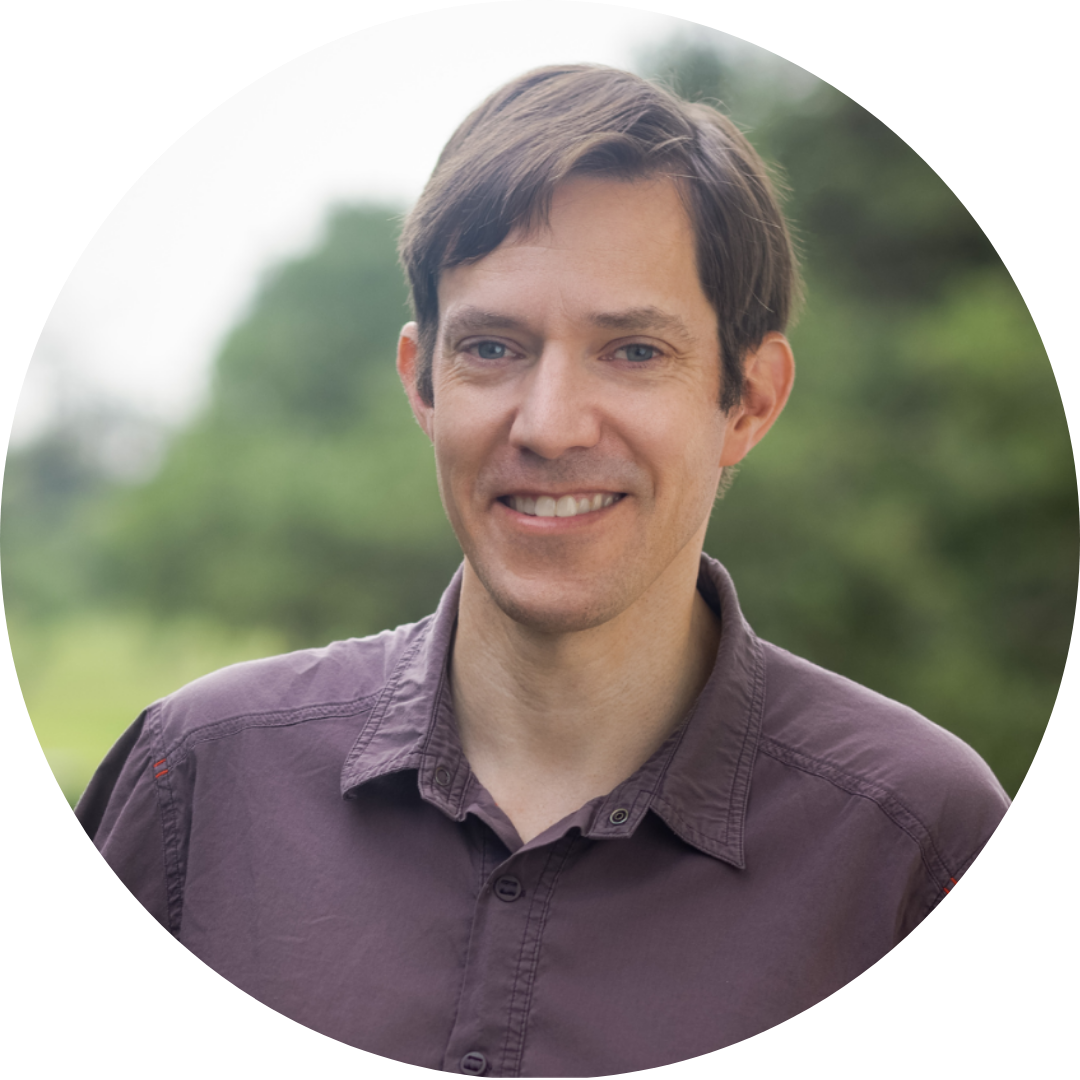
Roger Pine, CFA®, CFP®
Holistiplan
On this episode of Behind the Advisor, I sit down with Roger Pine, CFA®, CFP®, CEO and co-founder of Holistiplan, to discuss what it really takes to grow a fintech company from an idea into an industry-leading business. Roger shares how winning the XYPN Fintech Competition in 2019 helped validate Holistiplan’s vision and kick off a remarkable growth journey, from a two-person startup to a company of more than 100 employees.
Throughout our conversation, Roger reflects on how his role has evolved alongside the business. While his passion for product development and programming helped shape Holistiplan’s early success, scaling the company required him to shift from building the product to building the organization. He also shares how advances in AI are changing advice technology and why advisors should stay curious and embrace innovation without losing the human element of financial planning.
What stands out most is Roger's perspective on entrepreneurship: growth means letting go of familiar responsibilities, embracing uncertainty, and continually adapting. Whether you're building a firm or growing an existing practice, his insights offer valuable guidance for advisors looking to create lasting impact.
.png?width=672&height=168&name=XYPN%20Radio%20Blog%20signature%20(1).png)
Listen to the Full Interview:
Watch the Full Interview:
What You'll Learn from This Episode:
- How Holistiplan grew from a startup into a 100-person company
- Why leadership changes as your business scales
- How AI is reshaping advice technology and advisor productivity
- The importance of staying curious and making data-driven decisions
- Lessons on balancing innovation, growth, and company culture
- Practical advice for advisors considering entrepreneurship
Featured on the Show:
- XYPN Technology Partner
- XYPN + Holistiplan Partner to Power Tax Planning
- Your Year-End Tax Planning Playbook
This Episode Is Sponsored By:
Read the Transcript Below:
Alan: Welcome to "Behind the Advisor" with XYPN, your behind-the-scenes look at the challenges and victories fee-only advisors encounter as they launch, run, and grow their independent firms. Join us for a deep dive into real-life stories, frontline insights, and the actionable strategies it takes to build a thriving, purpose-driven firm on your terms.
Today, I'm super excited to be joined by Roger Pine, CEO and co-founder of Holistiplan. Roger previously joined the podcast back in 2019 after they won the XYPN Fintech competition, to talk about how curiosity led him from financial planning to building an industry-changing tool. This conversation picks up after that moment.
This episode is about what happens when your idea actually works, how your role changes, how your thinking sharpens, and how building tools for advisors reshapes the way you see the future of advice itself. Roger, welcome to the show
Roger: Thank you for having me, Alan. Happy to be here.
Alan: I had so much fun last year when we were announcing the XYPN and HolistiPlan partnership because we went to dinner and were reminiscing about the fact that I've literally known you since I got into the industry.
Roger: Yeah. Yeah.
Alan: So I won a NAPFA conference scholarship when I was in grad school and Roger was on the, you were on the committee that gave me that scholarship, which was awesome.
Like I didn't know that at the time obviously, but got introduced to this world of fee-only planning. Again, if we go back seven years when we did our first recording, it feels like it was maybe a year ago.
Roger: We haven't aged a day, but yes, it's been seven
Alan: Not one bit.
Roger: Yeah, I can't believe it
Alan: Let's see, 2019, that means I have three more kids than I did then and life has happened.
Roger: Yeah
Alan: Can you remember 2019 circa 2019, like where the business was at from a, let's just say like team member headcount just for context, but then also just a capabilities and where the business was and then we'll talk about how that has evolved
Roger: 2019, the team was two people. It was me and co-founder Kevin Losier. And we did have a programmer contractor who gave us 10 hours a week, but that was it. That was a very different company. And that was the stage where, you know, anyone who's listening who started a company, like when you start, it's just wouldn't it be amazing if somebody bought this product?
Wouldn't it be incredible if somebody showed up and validated this idea that I have and said, "Yes, I wanna buy that thing"? And we were still in that mode. XYPN happened and suddenly dozens or even a few hundred people had showed up, and so we were starting to realize that this was a real thing.
But I had no idea at that stage where I would be today. I think we have 100 people now, and we had two, like literally two back then and now 100. We've come a long way and I've learned a ton during that time
Alan: Yeah, I like to talk to the team about the end of history illusion, where if I ask you, "Hey Roger, where are you gonna be in 10 years?" The answer is usually just an iteration of where you are today. So for financial planners, we ask "Where do you wanna be?" And it's "Oh, I want to be making a little more money.
I'm gonna be living where I am. I'm gonna have the same fa-" Like all of the things. But if you think back 10 years and where you were and where you've come and the amount of change and just recognize that amount of change will happen over the next 10 years, it's like in l- it's invigorating and terrifying to just under- to re-real- realize like we have truly no idea where we're gonna be in 10 years
Roger: It really-- had you told me I would have all the responsibilities and pressure that I have today back then, I might have told you like, "No, I'm not interested in that journey." Now, looking backwards, I'm like, it was all worth it because this is the best job I've ever had, and the adventure, the journey was incredible.
But you're right, terrifying is a good word for what could actually happen if you could see yourself 10 years from now, if things really take off in a way that you kinda want them to take off. Like when you start a startup you want amazing things to happen. You have an idea you're passionate about and you think, "If only people would connect with me on this idea, this would be great.
It could be wonderful." And then if it happens, what is it? Catching the tiger by the tail or whatever it is. There's a lot behind that. But yes, it's still been the best job I've ever had and a journey that I wouldn't trade for anything
Alan: Yeah, I love that framing because I'm in the same boat that if you had told me 12 years ago when we were launching XYPN where we'd be today, I would've walked away. There's no way I would have signed up intentionally for the job that I have today. But I love what I do, and I love that we went on a journey.
So sometimes I struggle when advisors say "Oh, I wanna grow into an enterprise." And I'm like, "Do you really? Let me tell you about the journey." But you just don't know till you get there, and you won't know, again, I was very convinced I would not have enjoyed this, but it has been really rewarding
Roger: And I'll tell you there's a trap you can fall into with startup life, which is a lot of nostalgia for the early days. Living in the garage, like that sort of stuff. I remember, and I'm not comparing myself to this person in any way, but I heard an interview with Mark Zuckerberg, the Facebook dude, and they asked him "Do you miss the early days?
Do you miss the early days when it was you and a bunch of dirtbag dudes in a basement coding?" And he said, "Absolutely not." He said, "Today, I'm able to do so much more because I have this bigger platform I can build on." And so he's still connected to-- say what you will about his vision, but he still feels connected to his vision, and the scale that he's achieved now, he's excited about what he's able to do with that new scale to continue to execute on that vision.
And so the trap can work both ways. You can sit where you are and you're like, "Man, 100 people, I got all these responsibilities, and wasn't it awesome when Pure, when it was just three of us in a room?" And there is a certain fun in that. Absolutely. Those were great days. But we are also able to do so much more now that we are where we are.
So that's important just to remember the grass is always gonna be greener. You just gotta remember there's something really amazing you can do as an entrepreneur when you're creating change in the world, and you just gotta stay connected to your vision
Alan: Your story was that you were an advisor and then transitioned into the tech world. 'Cause people ask me this question all the time: do you miss being an advisor? Do you wanna go-- Is that gonna be your encore career going back to being a planner? Or is the tech world where you're going to stay, whether it be with Holistiplan or whatever happens next in the future?
What do you see for yourself with all of that?
Roger: I was not made... I am inspired by what advisors do, and I-- what they do is important in this world. Financial planning is a force for good in this world. I truly believe that. I was not meant to do that full-time. I did it for 10 years, but it was not the right profession for me. There's a lot of reasons why that's true.
I think, I don't know, I'm always chasing the next thing, or I don't know. It's, I'm not-- I wasn't the right person for it. And no, I will not go back to being a financial advisor. I'm a little bit lucky in that my wife runs a financial advisory firm, so I still feel connected to that world. And, but and a lot of my best friends are financial advisors, and so I'll always have that connection.
But I, yeah, I'm not the guy. I'm not the guy you want as your financial advisor. As much as I know a lot about taxes and have learned a lot over the last few years, I'm not the person you want because I, I'm always kinda looking to that next thing, and I'm not gonna be present with you as an advisor the way I need to be
Alan: That's great framing. We talked about there being two of you back in 2019 when we last did the podcast. Give me an idea, whatever metric you use to define the business today in terms of team members or any other KPIs that are, that would be relevant to kinda tell listeners where Holistic Blend has grown to.
Roger: Oh, man, I-- it's hard to describe that. And the... I remember actually, so I remember when we won the XYPN competition, and I went to dinner with Kevin, because we're like, "Oh, shoot, now we have to build a real company." This is real now, right? And we were just looking across the table from each other, and I was like: Look, my job is to build out the product.
I was the developer in the company. So I was like, "I gotta go finish building out this product, and you, Kevin, are sales, finance, and support, and anything else we can figure out. HR, anything else we can figure out is you, Kevin." And slowly over time, we've had to make ourselves obsolete in all of those roles, and Kevin did a better job than I did.
I'm still here kicking around, still writing code every now and then. But yeah, I don't know if that's a metric so much, but we had to bring in directors and then VPs of these various functions who are better than us at these things, so that we could continue to add the value in the way that's the highest leverage, which is the vision for the company, the vision for the values of the company, what the pro- where the product should go.
Like, all those sorts of things. That's what we've done. I don't know. I can't give you metrics besides it was all... I looked around, and there were a bunch of people, and they're all great, and I love working with them, and most of them are better at their jobs than I could ever do at their jobs. And I think that's just what you do as you keep building, is try to think about, what is my highest leverage use of my time?
I don't know, Alan, have you ever heard the, what's it called? High Output Management. You know that book by Andy Grove? It's like that it's that management book that everyone, all the Silicon Valley bros always talk about. And I'll tell you something, I've never actually finished that book, 'cause it's so good.
I always get through it, and I'll get to some idea that it's like, "Oh, crap, I gotta really... This is so amazing. I gotta go do..." I've never finished the book. But his big thing in that book is all about leverage. As a great manager, your job is to find the activities that are the highest leverage for you.
And like, when I think about the things that I've done over that period of time, it's keeping, to the extent I can, the things that are highest leverage for me, and then putting o-on other people the things that are highest leverage for them, that they're better at that I'm bad at, and then also what are all our gifts and how they fit together.
There's no metrics for that. And honestly I don't know about you, but the way I've built this company is flying by the seat of my pants. You just show up and you're like, "Boy, we're really busy over on support. We gotta get more people to support us." And that's kinda what...
I didn't read any books on how to do it. I haven't done it before. But that's just what you do. You gotta find where the needs are, and then you gotta remember why you're here, though, right? And I know you had some questions about, like, when do you micromanage and when do you not and those sorts of things, and it all comes back to that leverage question.
What is my highest leverage use of my time? So I don't know. Bad answer for you. I don't know what the metrics are, but we got 100 people and they all, they're all busy, I promise you.
Alan: Yeah, I-- The biggest company I ever worked at before starting XYPN had five team members. And we're about the same size you are. We got about a hu- about 100 team members now. We have departments with more than five. And I, I found there's this balance of there are times where I wish I wasn't recreating a wheel that someone else has solved, and maybe I would've known had I worked somewhere else that was larger.
But then the other thing is we just make decisions based on what we think is the right thing to do. And it's not gonna be what's right for everybody, but we've created this sort of unique culture and unique experience for the team and the members because we didn't really know what we were doing, and we just tried to do it the way that we thought was right.
And I think that has helped. Like I, I don't know, when people start just planning just trying to run a business out of a spreadsheet, it loses the soul, I think, of the
Roger: Yeah, that's for sure. And let's be honest also, Alan, 100 people is not a big company. Like we can walk around and strut around "Hey, I got 100 people in my company." And I get it 'cause like we both started when there were two of us. So it seems like a lot, but there's...
Most companies are bigger than 100 people. I worked for one, I worked for Infosys, which is a big outsourcing company based in India. I was there to help them start their consulting business, and I think we had 70,000 people when I worked there. All right? I don't know United Airlines, how many people there are...
100 people is not that huge, and so we, you and I cannot be like, "Oh, my life is so complicated 'cause we got 100 pe-" No, sorry. not that hard. There's... 100 people is not that huge. It's different from three, and we had to learn some things along the way, and we took some hard knocks and some bumps along the way, but let's be honest, 100 is not an incredibly huge number.
You know what I mean? I have to remind myself of that
Alan: Yeah.
Roger: because otherwise you're like, "Oh, yeah, I'm too important to deal with this problem," or "What the heck, man? We need a policy for this thing." It's like, "No, we only... It's only 100 people. It's not that big." That my high school was not a huge high school, and it was several hundred people.
You know what I mean? This can be done. I remind myself of that
Alan: Yeah, no, it's great, it is a great reminder. I think it's from the book, or it is from the book "Scaling Up." They talk about the percentage of companies that make it to a certain level. I think it's 0.4% to make it to a revenue level that would imply 100 team members. I think that's 10 million.
So you are in the top one or, four, four-tenths of 1% of businesses in terms of size, top meaning size. However, there's, whatever, 20 or 30,000 companies that are bigger than we are, so how have you gone about this evolution from builder to CEO, from, doing and building the product and doing the support to setting the vision?
Do you feel like there, there's been some steps in that process that have been intentional, or has it truly just felt like flying by the seat of your pants?
Roger: Yeah. Really the latter. So to roll the clock back quite a bit, I love programming computers. I just love it, and it's a thing that I learned later in life. It was a New Year's resolution I had picked up in my thirties, and then I turned 40 and had a midlife crisis, and I was like, "I just wanna have a job where I just write code all day."
I just love it so much. And so that's what I, if given the opportunity, that's where I'm always gonna go. There by the way there's CEOs who are like sales CEOs, and there are CEOs who are product CEOs, and then there are like deal maker CEOs. I'm very much a product CEO. My answer to every problem we have is "Oh, we could just do a product solution to that thing," and that's not always right. So I've had to kinda learn that sometimes there are other answers to different questions. But my evolution has been... I try to frame it in terms of that question, like, where is my highest leverage? And a lot of times my highest leverage is still deep in product questions. I still have direct experience being a financial advisor. I still know our code base better than just about anybody because I touched a lot of it, built a lot of it, and so that's a very powerful combination that as long as we have that advantage, we ought to use that. That's a high leverage use of my time. Now, sometimes I can get pulled into what the font size should be for this button versus that button?
And then I get drawn into that and like my... The person that I am, will happily get drawn into that, 'cause I would much rather deal with that than I would like, let's deal with this HR policy question. You know what I mean? So I have to check myself sometimes. But then I also have to remember that sometimes the details are worth sweating.
Sometimes my highest leverage use of my time is in fact, what is the font size on XYZ thing? Because that ends up being a very high leverage thing because the user experiences blah, blah, blah. And I sometimes get it right and sometimes I don't. And that's just like the thing that I keep trying to learn and improve and remember that framing, which is just trying to do the highest leverage thing I can and and under...
and I also ask the people around me to please understand that I'm learning too." And I think the people who've known me from the beginning, like they know I'm just making it up as I go along, right? The people who were there like the garage days. But the people who join the company see the CEO at the bottom of my email, and they're like, "Oh man, this guy, one, knows what he's doing, and two has a plan for everything."
And no, I'm a human just like you, and I'm doing my best, but the people around me have been very helpful in that regard. But that's just what we have to do. We just have to keep figuring out as we go.
Alan: I talk to a lot of advisors now that we're, just over 12 years in, with XYPN, and some of our early members, they've built successful firms. They've gotten to a point where they're asking, "What's next?" Is this all there is? I've reached this pinnacle of success.
I've reached the goalpost four times, and I still hit this goal. And now I'm bored. I'm trying to figure out what to do. And you've reached the mountaintop a couple of times through this journey. And you could've gotten off the, off, you could've gotten off the trail if you ever wanted to.
So how do you think about defining success for yourself, that tendency for the goalpost to always be moving, particularly when you're in this environment where it's, you can always be 10X? There's always an idea to 10X. I guess, how do you handle that for yourself as the business owner?
Roger: So there's two elements to this. One is, and I don't think people talk about this like they should, but I'll get to the question of what are you building and where are you going? But one of the things is like, there's a lot of people counting on me. Like I, I feel an enormous amount of responsibility that, you know, towards my colleagues and our customers.
I wanna make sure that we don't let people down. We made a lot of promises to people that we would help them be better at what they do, and that we would give people career opportunities that would be life-changing for them. And like we have to deliver on that. And so that drives me a lot.
I don't want to, I don't wanna fail people who've believed in me. So that's a big thing. Your question was more like, okay, me, like where am I trying to go? I like building stuff. It was really heartening for me to hear that interview with Mark Zuckerberg because he's another guy.
He's got everything he could ever want, and I think people criticize him as being like, "Look, you have everything and you're greedy and you don't..." And maybe he is, but I respect the idea that there's more things I wanna build. I like building things and I, again, I love computer programming and I love building products, and I love seeing advisors be better at what they do.
So I don't know. I could see myself doing this. I can't work this hard forever. I can't physically do it forever, and as I age it'll be harder to work as much as I do. But I'm still having fun. We said this very early. Kevin and I, one of the founding principles we said is we're here to have fun and make money.
And you can do one or the other pretty easily, but it's hard to do both sustainably for a long time. And literally in our meetings we would say, "Hey, are you having fun and making money? Yes. Okay, let's keep going." So we would literally do that, and I still have to check myself on those questions.
'Cause if you're not having fun, like the burnout is real. And then it... when the CEO burns out or when leadership burns out, like the whole company really, is, your customers, your colleagues, everyone's gonna suffer. That's not fair to anybody. So you have to find a way to keep the joy in what you're doing.
And so I, I really try to do that. I tr- really try to do that. Actually, Alan, before we did recorded the call, I said, "I'm in London," so I'm like half on vacation and half working and I do that so I can keep from getting burnt out, so the last couple days I was in Scotland, but today I'm back in London and I'm working and I'm, I'm enjoying getting back up to speed with my colleagues on what's going on.
So anyway, that's what's, that's what's coming for me is more of the same. Yeah
Alan: So let's shift the conversation to the future of advice tech, because, when you were building a whole list to plan, and I'm so jealous 'cause I couldn't even get access to the code base. The devs would never let me in there, and even if I got in there, I wouldn't know what I was doing.
So I'm not a technology builder. I'm more the sales CEO that you talked about. But like the world has changed and I know every seven years you can look back and say the world's changed a lot, but like holy crap, particularly in the last couple of years the... everything has shifted. And so I'm just curious, as you're thinking about the future of advice tech, like where do you see the opportunities?
What are the gaps that you're like, "Man, I really hope somebody closes this." I could, but I've got my own gap that I'm working on, I can't do everything. So I guess what are you thinking about in terms of opportunities for the advice industry?
Roger: Yeah. First of all, you're totally right about every seven years. When we started in 2019 no one was ready to upload a tax return to the internet. No one was ready to do that. And in fact, Alan, we were at conferences probably, what, three years prior, where people were like, "A CRM on the cloud? would never put my CR..." It was not that long ago that people were saying that. That wasn't like two- 2003. That was like 2016 that we were hearing that, right? And then what happened? COVID came along, and everyone had to go work from home, and everything was on the internet. And so yeah, we kinda rode that wave of that shift.
And of course, now the new shift is the new technology we have with AI. And so we have to be part of any conversation about the future of technology and the future of the business. And yeah we're embracing that. We're working on that. One of the things for me personally that's really fun is I'm able to work in the product in a way I wasn't before.
I didn't really have time to put hands on code as much as I... in the early days. But now with some of these AI tools, I'm able to be... I would argue like 50-- I'm like 50X more efficient now in writing code than I was. So that's a life changer for me. And our velocity of what we can come out with is so much greater.
So that's gonna be really interesting. And then of course, like what, where the product needs to go and, people will see more from us on that through the, in the next few months. But I won't give away the ending on that. But yeah, that, that's the huge thing. You're right. Like every few years.
And the thing, the conversation now is the same as we've had over every five years, which is the single pane of glass. Everything's gonna be in one place. And I don't know. There's maybe like a real chance it actually happens this time. I don't know. We've heard that promise a thousand times.
I think Salesforce was gonna be the center of my whole business, and before that it was who knows what. But it could maybe really happen now. The problem is like there's so many great minds out there of people building incredible things, and to just say they're all gonna end up in one single company and one single pane of glass, I'm not sure we want that.
We want this blossoming, this flowering of innovation and ideas. We just need to find a new way to tie it all together, and AI actually has some interesting promise for helping us do that. But I don't wanna live in a world where it's just like I'm at-- I'm beholden to Mark Zuckerberg's view of how I'm gonna be on the internet.
I've already seen that. I wanna see all the different ideas that are gonna keep bubbling up the way we've seen over the last few years.
Alan: Yeah, definitely think, having worked with thousands of individual firms now where it's like, they are so unique. Even when their website says they do the exact same thing as the next advisor there, the way they run their business, how they think it, things are best, whether that be ethically, morally, or just operationally or what they enjoy, like it's different from everyone.
And then, I am very anti all-in-one solution. I don't think that is coming. I think lots of people have tried it and failed. But in the end , I would suspect you've seen this, being able to focus in one area allows you to build something that no one else is able to replicate when they're also working on 14 other tools.
Like it's just too, it's too complex
Roger: Maybe, although now you can build stuff so much faster. Like what changes? Here's the question I ask the team. What-- When writing code is no longer scarce what does the world look like when that's true? We're not totally there. I think the scarcity has moved to other things like code reviews and QA and all that stuff.
But i-i-if we go to a world where something that was scarce, writing code, is no longer scarce, and we've seen plenty of revolutions in technology where that has happened... What changes? And so that's a real question that I don't have a great answer to. It's gonna be really good.
Any time that we take something valuable and make it more abundant or something with high utility and make it more abundant, the word value you have to be careful about. Something to be valuable has to have utility and scarcity. When we take away the scarcity, we take away the value, and that's another interesting question for all of us.
Anyway that's the world we're gonna be living in, what happens when code becomes abundant. And then also what happens when answering a financial planning question becomes abundant. My mother-in-law, who started the business that I started working in, started a financial planning firm in 1986, and there was no internet back then, and she talks about the early days of NAPFA.
Alan and I met in NAPFA in our early days. What they were doing in NAPFA, they would all show up, they would fly into a place, and they'd be like, "Okay, I just figured out how RMDs work. I'm gonna share it with all of you." Because there was no... You couldn't look it up.
Alan: Sure.
Roger: You couldn't... Can you imagine a world where you can't email your client?
And there was never an email and you're in like you're, I don't know, you're typing up reports on typewriters and like you can't look up how the RMD rules work. Think of that world. And then think of where we are now and how much better advice the clients get. So anyway, these are all good things happening, but all of us are gonna have to adapt.
And hopefully all of us will manage to still have fulfilling careers and still serve clients really well, I hope
Alan: Yeah, I wonder, it, it's-- I've never thought about the framing of that, writing code is much more abundant in this world. So then the tokens become the stickiness factor of just how much
Roger: That is scarce. That's right, yeah.
Alan: But what is also scarce is the ability to write good code. That is, that-- Or great code, maybe I should say, is like that skill is still going to be incredibly scarce, probably even more so than it is today because the percentage of code that's being written by really good coders is going down astronomically. I already asked you if you'd ever go back to being a financial advisor, but if you're sitting in the shoes of our listeners who are mostly, thinking about starting a firm they're thinking about going out on their own, given what you know from the technology perspective, from the vendor perspective, like what would you do differently today if you were launching your own RIA than maybe you would've done 10 years ago?
Roger: Oh, interesting. So I never started my own RIA, so that's not a thing, that's not something I have direct experience with. Yeah, I have a lot of respect for Cheryl Holland, who's somebody who's spoken at a lot of advice, a lot of conferences, and one of the things that she talks about is live in data, which can mean a lot of things, but I- I interpret it to mean you gotta be curious.
You gotta be trying new things. That part of what our clients are expecting of us what my customers are expecting of me as a software vendor, and what your clients are expecting of you as an advisor is they expect you to be at the top of your game, and the top of your game means I understand what's out there, I've evaluated it.
I didn't just take some guy's advice who was on Twitter or whatever. I evaluated, I did my best efforts to understand it, and I'm trying to always elevate who I am and then the tools that are surrounding me. And so I know that's a vague answer, but it means experimenting. It means trying what's new.
And then, yeah, try a list of plans and try the other guy and then, see which one fits you better, and then where you evolve as a practice, that answer may change, too. And so you have to be always living in data. Another vague answer from me. I apologize, Alan. Maybe I should have been a financial advisor 'cause I can always kinda turn a question into another question.
But I think that's what ... I think because the rate of change is so great, it's imperative that we as advisors who take our job seriously have to always be working on leveling up at a, in a way that we never did before
Alan: Yeah, I think one metric that I wish I could track that I haven't found a good way to do is just how many days off are our members actually taking? 'Cause I, I talk to advisors who are like, "Oh I've been doing this for four years, haven't taken a day off yet." And I'm like, "That has to change."
And that's where when you are a solo advisor with all the responsibility and everything's on your plate, you can't turn it off. You have trade responsibilities. Your clients may email. So then you kinda get forced into this, okay I have to hire to ever take time off, which is a path, but it's not for everyone.
Most of us, I certainly didn't set out to manage people. Or you... But there are additional service solutions, and I think AI is gonna help with this . Can we get to a point where a- advisors are empowered to turn it off, even if it's one day a week, two days a week for a week at a time.
And we're not there yet, but it is something that I hope to continue to see. Otherwise, advisors are just gonna burn out, and there is a point where
Roger: Yeah, you gotta do what you love though, right? I don't know. For me, it doesn't f- what I do doesn't... People say this, and it's kinda BS, but sometimes it does feel like work. I'm gonna be very honest. But like a lotta times it doesn't, and like I, I think there's something that kinda just switches in your brain.
When you take the step of starting a business and devoting your life to this idea, I think it just kinda changes the way you interact with the world. I don't subscribe to this whole like founder worship we have in our culture right now, but there is something that's different about a person who is so brain damaged that they're willing to give up the stability of this job to do this other thing.
And I don't know, maybe it just comes with the territory. But you're right, you can't burn out, because again, you're doing a disservice to your colleagues and your clients if you let yourself burn out. And so that's... You gotta keep going right up to the edge, 'cause I do think like you can't be lazy.
You do, you need to invest in yourself. You need to invest in what you're doing for your clients. Try out that other software and see if it's gonna help you do a better job for them. But you're right, we can't do it 24 hours a day. But, that's the life we chose, whether people knew that or not.
'Cause like I didn't know that. I was just like, "Wouldn't it be cool to be a programmer? And wouldn't it be amazing if a few people bought my software?" And now it's just like I get all these questions I gotta answer every day. But that's the journey. That's the life we sign up for
Alan: Yeah, hindsight is 20/20. I do find folks are... they ask me these questions and it's almost like they're expecting an equation to be like, if I can just give them the right equation, they can plug in the variables and the answer will be so clear. And the truth is and Carl Richards talks a lot about this, like entrepreneurship is more art than science.
We want to believe it's a one plus one equals two, but in the end it's what color do you wanna paint the sky in your painting? And you're the entrepreneur, you get to do that. And you have to be able to defend it, and if you have investors, you've gotta be able to get them on board.
But in the end, like it's your sky to paint. And that's what I, that's what I enjoy about this is I am not an artist. I have zero artistic ability, but I do find my cr- my expression of creativity happens through business.
Roger: I think it's a great point. Yeah, and to me, that's why I love programming, like w- building software, because to me it's a creative discipline. Steve Jobs used to say that computer science is a liberal art. It's not an engineering discipline, it's a liberal art, and I think he's totally right.
It's a medium through which we can create. And you're right, business is the same thing. It's the same thing. You get to create something that didn't exist in the world, and hopefully it's something that leaves the world in a better place. That's the goal at least,
Alan: Yeah, and I'm curious how you approach... when I watch developers work, it looks like magic to me, okay? Again, I-- no, no programming background. So I can ask for something and an hour later it just magically appeared in the app. So what I like to tell the team is, you can build, we can truly build anything, but you can't build everything.
And so how do you go about prioritizing what gets built? Do you have a framework or a-- do you have an equation that you kinda run it through? Or is it really like you're relying on your gut to make good decisions?
Roger: Yeah, so I am terrible at the idea of saying we can't do that, 'cause you're right. With software, you truly can do anything. Like almost anything is possible in software. And it's... You're right. It's just a matter of time. And again, if code is no longer scarce, that equation changes.
But let's leave that to one side for now. There... A lot of it is gut. A lot of it is trying to go back to our original framing of what we wanted to do. Like us, we wanted to help advisors be more helpful advi- help their clients deliver richer planning and for more clients, and that means you can't just...
That's why we're trying to do things other than just tax. And we've had people criticize us online. They're like, "They should stay in their lane and just stick with tax." A financial planner shouldn't just stick with tax. A financial planner needs to do these other things. And I love doing that. I want to build more of those things.
We have the benefit of thousands and thousands of advisors telling us how we need to improve our product. Some of those ideas are really good, and some of them are really dumb. And part of our job, and your, this is your job too, like we're curator. I see myself as a curator. I don't have to come up with all the ideas.
I really don't. My job is to curate the ideas as they come in and just kinda run it through. And I've never written down what the framework is, but you know it when you see it. "Oh, yes, we totally should do that. That's amazing. We should do that." Or, "Yeah, good idea. Put it on the list."
And then, "What an, what a stupid idea." And that's... And we kinda put those in buckets. And I'm lucky because in the early days, I was able to write code, and now I'm able to, and to a degree I wasn't for several years with these new AI tools. I could just build a thing. We were literally in n- 2019 in a place where an advisor would be like, "Hey, it'd be cool if you did this."
And if I agreed with them, I could call them back three hours later and say, "Refresh the browser," and it was there, right? I can't do that now anymore, of course, but that's what software can do for us as long as we listen to our customers and still understand like we're filtering it through a vision.
It has to be filtered through an opinionated vision of what the world should be 'cause otherwise you'll get too many ideas, and you'll just go flip from one side to the other. But, I tell you what, Alan, I'm terrible. I'm terrible at saying we should only do XYZ 'cause I wanna do everything.
I've always been bad at that.
Alan: Yeah I feel like my role, like yours, has definitely evolved to this world of I can-- I now have to look at 100 different requests and 100 different problems, and then there might be actually one elegantly simple solution that solves all 100 of the tasks. And, and that's what's so-- that's what I enjoy about software is being a, maybe say be- being able to see the forest through the trees, but being able to see that high-level strategy.
What's the simple solution that helps the most?
Roger: And that's our high-- that is our highest leverage use of our time, is to see the forest through the trees, right? That's what a CEO has to do. And sometimes it's not a s- it may not be a software problem, it may be a policy problem. It may not be a policy problem, it may be a product problem.
And like everyone, our customers are very much in a silo. Some of our colleagues are very much in a silo around what their job is. And so our job is to see across all of it. Again, try to be a curator and see and try to frame the problems differently. That's the thing that I've really learned a lot about, and I've enjoyed my job, but it's also the most stressful part of your job, 'cause sometimes you're presented with problems that you didn't think you were gonna deal with that day.
Your example is about how I get to paint what color the sky is. Yeah, but they're like: "I don't need you, I need you to make a sculpture over here," and then we gotta paint the ground and the sky we ran out of paint. Those are the things you're dealing with, right? And as much as you wanna get back to painting that sky, you got 15 other things you gotta work on, r-right? It's part of the fun
Alan: Roger, our time together has flown by. So I'll ask you the final question, which is, if you think back to Alan and Roger talking in 2019, if there's one piece of advice you could go back and give your 2019 self if part of that conversation you could have told yourself something that, that you think would have helped you along this journey, what do you think that piece of advice would be?
Roger: I think that I tried to do... I still try to do too much. We talked about leverage, we talked about when do you micromanage, when do you not? I think that's an area where I haven't always gotten the balance right. And so that's just, trust the people around you and, but empower them to make the right decisions.
I do my best at that. I learn more about that every day. But that's the thing I could have done more of in 2019. The other thing I would advise people to do is make sure that especially like with your... If you're working with a co-founder, make sure you are on absolutely the same page about where you're going.
And when that starts to diverge, have those conversations. Kevin, who I started Hoist the Plan with, is no longer working at Hoist the Plan. Our visions for where we wanted to go started to diverge, right? We wanted different things and fortunately, we reached a point where both of us, I think, walked away happy from that.
But I would imagine had we worked on that a little more, it would've been easier for us to navigate that. Maybe we broke our own rule about having fun and making money, right? We maybe broke our own rule and didn't catch it early enough that we weren't both having fun, so that happens. I won't go into details about that, but that's a thing that happens with any great partnership that you have to evaluate that. And that's like a marriage and you gotta make sure that you're investing in that relationship like any other one you have
Alan: Absolutely. Roger, thank you so much for taking the time to, to come on the show and share more about your journey. I hope listeners were intrigued by the story and go check out Holistiplan, a super valuable partner for XYPN and our advisors. And thank you for what you've done to be able to move the profession forward, because now what Holistiplan does feels like, "Oh, yeah, of course we have that."
But seven years ago, we did not. This was totally new, this idea that we could provide value. So thank you for coming onto the show and sharing your journey.
Roger: Thank you, Alan. Yeah, it's been a real pleasure talking to you and knowing you over the years. I was there actually at a conference when you were just starting XYPN. I remember you were talking about, "Yeah, we're doing this thing." And I probably thought you were nuts, but you've done a fantastic job
Alan: It's so true. Listeners, thanks for hanging out with us on "Behind the Advisor". Want more bonus content from this episode and future episodes? Subscribe to our email list at joinXYPN.com/BTA for "Behind the Advisor". Remember, it's all about helping people live their great lives here at XYPN. We'll catch you on the next episode
Unlock behind-the-scenes content—subscribe now!
Featuring
Roger Pine, CFA®, CFP®
Holistiplan
Share
The Benefits of Fee-restructuring & Other Mid-course Growth Decisions
The Benefits of Fee-restructuring & Other Mid-course Growth Decisions
Jun 1, 2023
From $30K to $330K in One Year: How to Handle Explosive Firm Growth
.jpg)
From $30K to $330K in One Year: How to Handle Explosive Firm Growth
Jan 14, 2026
Beyond the Balance Sheet: Advising Families Across Generations
.jpg)
Beyond the Balance Sheet: Advising Families Across Generations
Jun 3, 2026