





These Related Episodes
Featuring
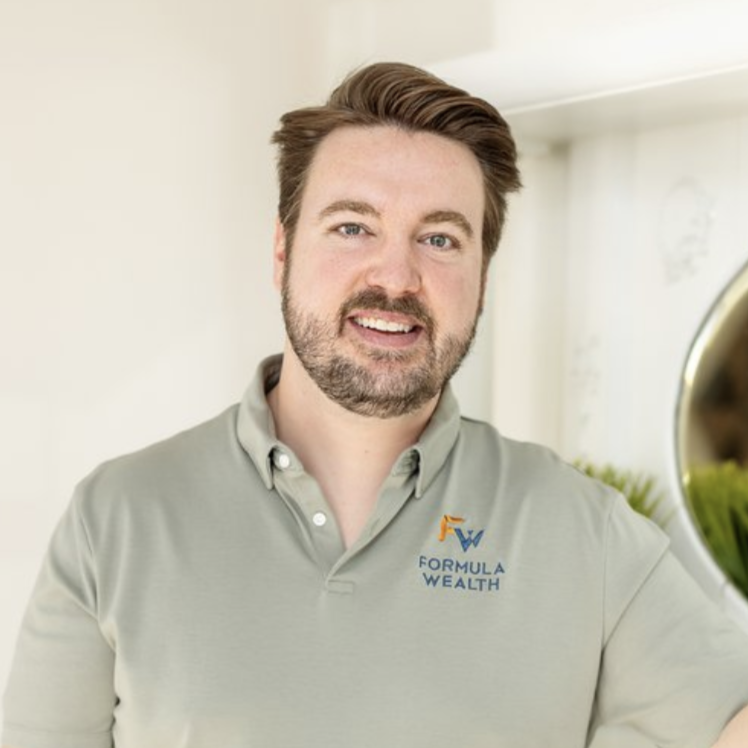
Chad Holmes, CFP®, CPWA®
Formula Wealth
In this episode of Behind the Advisor, Chad Holmes, CFP®, CPWA®, founder of Formula Wealth, shares how his practice has evolved into a focused niche around multi-generational wealth planning. Since his first appearance on the XYPN podcast in 2022, Chad has deepened his focus on helping families prepare for the financial, tax, estate, and communication challenges that come with aging parents, inheritance, and succession planning.
Chad explains that effective wealth transfer is about more than passing down assets. It is about transferring understanding, reducing complexity, and helping families make proactive decisions before a crisis or major life transition occurs. His work, including his book The Inheritance Playbook: Helping Your Parents Pass the Torch, Not the Tax, reflects the growing need for families to have clear, ongoing conversations about legacy, responsibilities, and continuity.
For advisors, Chad’s approach offers a powerful example of how to build a meaningful niche by moving beyond traditional asset management and becoming a strategist for the entire family system. By helping clients think of themselves as the “CEO” of their personal wealth, advisors can guide families toward stronger communication, better preparation, and more intentional planning across generations.
.png?width=672&height=168&name=XYPN%20Radio%20Blog%20signature%20(1).png)
Listen to the Full Interview:
Watch the Full Interview:
What You'll Learn from This Episode:
- Why multi-generational planning is becoming an increasingly important niche for advisors
- How Chad Holmes built expertise around inheritance, estate, tax, and succession planning
- Why wealth transfer should include education, communication, and shared understanding
- How advisors can help families prepare for aging parents, legacy decisions, and unexpected transitions
- What it means to shift from traditional asset management to serving as a family wealth strategist
Featured on the Show:
- Chad Holmes, CFP®, CPWA® | LinkedIn | Website | FAA | Ep. 339
- The Inheritance Playbook
- Family Wealth Resources
This Episode Is Sponsored By:
Read the Transcript Below:
Alan: Welcome to Behind the Advisor with XYPN, your behind-the-scenes look at the challenges and victories fee-only advisors encounter as they launch, run, and grow their independent firms. Join us for a deep dive into real-life stories, frontline insights, and the actionable strategies it takes to build a thriving, purpose-driven firm on your terms.
Today, we're joined by Chad Holmes, founder of Formula Wealth. Chad was previously on the XYPN podcast back in 2022, so that was episode 339, talking about how he built a profitable fee-only firm while wor- working part-time. This time, we're focusing on how his work has evolved, specifically into helping families navigate aging parents, succession planning, and multi-generational wealth decisions.
This episode is about redefining what it means to serve clients well, planning not just for this generation, but for the entire bloodline. Chad, thanks so much for taking the time to come back on the show.
Chad: Great to be back, Alan.
Alan: So it's been four short years since we spoke last. We were in the m- just deep in the middle of COVID.
You were building a practice but needed to be part-time because of family dynamics, and we've come a long way. Sometimes it feels like it was just a minute, and sometimes it feels it was a couple decades. I'm excited to dig in. So I guess catch us up to speed a little bit.
So for listeners, if you want to go back and hear Chad's sort of backstory and start of the firm and all that again you can go to episode 339. You can find that at XYPlanningNetwork.com/339. And so we're gonna kinda start in 2022 and go forward over these last four years. Can you take me back to 2022 and reset where were you?
Where was the business? Where were you from a family perspective? And then we'll go forward from there.
Chad: So we had a two-year-old daughter back in 2022, and I was working part-time as a stay-at-home dad. And my wife was the breadwinner, and so we just had a good thing going, and I was en- engaged in the industry and I was really enjoying it. But it was getting to the point where I was wanting to grow but I also couldn't take on just a ton of new clients.
And so I really wanted to move upmarket, and so I decided, you know what? Why not get some more letters behind my name? And because that always helps, right? So I go and get the Certified Private Wealth Advisor designation, which really helps higher net worth families with unique tax estate insurance problems.
And I really like the subject matter. And as I'm going through that I'm trying to find direction of where I wanna take my firm and y- you can't just say, "I really wanna work with high net worth families. Please come find me." That doesn't work, especially when you work out of your house And a few months into that program we get pregnant with number two, and it's exciting and amazing, but I realize I am not going to be able to work hardly at all in the next year when the baby comes.
And so I decided I will lay low from a financial planning, client building standpoint during that year and because, with nap time, everything's unpredictable and I just can't even set meetings because I don't know when I'll be available. So I decided I'm gonna start writing some blogs during this period of time before the baby's here, I'm gonna do a bunch of writing, and then I will release it slowly over the period of while the baby's really young and before daycare begins.
And so hopefully by the time I'm ready to grow, I will have at least a name out there. And so it's, all right what problem do you like solving? And one thing that I kept coming back to was I was blessed enough to be able to serve both my parents and my grandparents. And family's not in the ultra-high net worth space by any means.
But what was really interesting is that I'm trying to minimize taxes for everybody and do investments, and my grandparents are all in fairly low tax brackets, and they're just taking required minimum distributions and a little bit of pension. And, my parents would then inherit IRAs and they're still working and don't plan to stop, and they're in a very different tax bracket.
And I'm stepping back and challenging, okay why am I minimizing this generation's taxes when for the bloodline, for the generation the family unit, it's actually going to increase taxes by the end of it? And so I start challenging a lot of the traditional financial planning rules of thumb and I bring it to my family.
I'm like, "Hey I think, my grandparents should start pulling a lot more out of their IRA so that next gen inherits after-tax assets." And so that's just one simple example of something that I was challenging. And so I started writing blogs on different ways people can think about planning when you're considering two or more generations as opposed to just the individual, one client unit.
And I'm explaining these blogs to my mom and she's "Th- these aren't blogs. This is a book. You need to write a book." And so that's what it turned into. So I spent months, all of 2023, basically not allowing people to book time on my calendar and just heads down writing about the book.
And I'd post every now and then, "Hey, I'm writing a book." But finally the book came out, and it's called The Inheritance Playbook: Helping Your Parents Pass the Torch, Not the Tax. And it's sold over 7,000 copies already, and it's still moving. And I'm terrible at marketing, so the fact that it's still moving, it's a subject that people need, and we've all heard about the great wealth transfer that's upon us and, who-- the number keeps changing, and it's all made up num- But when you get into the trillions, everything doesn't even make sense.
So it's, 80 to 90 to $100 trillion is passing in the next decade or so, which is just crazy. A lot of that's passing without any proactive planning, and it's just going to happen, and people don't understand that there are things we can do proactively to minimize taxes, minimize probate headaches, minimize confusion, maximize legacies and communication and understanding and inheritance.
And that's what I began to focus on with this book. And then because of the book, I've been able to be a guest and speak about this subject on, a lot of great podcasts, and this is another one, and I'm very excited to talk about it and share with the advisors listening how you can really get into helping your clients do this too without sounding greedy, without sounding, "Hey, I just want to, you to introduce me to your parents or to your kids so that I can get more clients."
There's ways to go about it to really help the family and to help your business as well. But it's not done in a self-serving way.
Alan: So because of the book and the speaking engagements, are clients coming to you knowing this is your niche and you're the expert in this? Or are they finding you hiring you, and then, then you're introducing these concepts and then maybe later on down the road they bring in their parents or their kids for those conversations?
Chad: In the prospect meetings I do make it clear that I specialize in multi-generational planning. And I say, you don't have to bring on family members, but I will be asking about them periodically just to make sure, hey, if your parent passed away today, are you the power of attorney? Who is power of attorney?
Who-- or executor?" And, who's able to understand what next steps are? Do we have, do you have any idea what you would be doing?" Or if it's the other way, your children, "Do you have confidence that they would feel comfortable finding everything and having online credentials and bill pay and all that stuff?"
And so I bring it up with clients probably once a year, just, "How's the family doing?" Get a, and then get a pulse on things and, Once I demonstrate, there's unique value when we're planning from a multi-generational perspective, most people are like, "Ooh, yeah, I want that.
That sounds very helpful."
Alan: Yeah, so can you talk about what, what does multigenerational planning really mean? Because, there's-- I feel like there's segments even within that around family business or leaving, foundation-type legacy and that sort of thing versus just leaving a boatload of money or stocks or whatnot and obviously more than that.
Can you-- do you focus on one of those areas? Are those-- Do you find that clients intertwine between those different segments?
Chad: Yeah I like to think of you as the client, you are the CEO of your own personal wealth. That-- and that's a business, and businesses need continuity. If the CEO passes away or steps down, there needs to be a very clear plan in place. I love the quote, "Clarity is kindness." And if we can be very open and communicate clearly about what we want to say with our family and do that ahead of time, and people aren't guessing all sorts of things.
But this succession planning or continuity planning, it's designing financial clarity that survives the client. Most people think it's about just transferring assets, but truly it's about transferring that understanding. Like it or not, assets are gonna move to the next generation, either because of the will or if you're an intestate, they're gonna just move.
The beneficiary forms work, the trusts distribute things, but that understanding, that doesn't transfer. There's no state laws to help that move down. If the surviving spouse doesn't understand the income plan, or the daughter who's the POA doesn't understand the IRA strategies, or the heirs don't understand why the trust is structured the way it is, technically, yeah, the assets passed, and so technically the plan succeeded, but relationally, operationally, it failed.
So for me, that succession planning or continuity it's making sure that people aren't just inheriting money, but the map with it, and it's risk management around transition.
Alan: Super interesting. I don't think I've ever heard of an advisor talk about finances, financial planning with clients or intergenerational planning through the lens of succession or continuity planning. We talk about that For financial planning firms and trying to get advisors to focus on what happens to your business.
And you're using that same language, which makes a lot of sense with your clients. Do you find that resonates? Do you have to explain that? I, yeah, I'm just curious, like how much of this is on the, like clients are coming to you saying, "Yes I saw your blog. This is exactly what I've been looking for," versus maybe you having to do a little bit more, quote unquote, "selling" or convincing of "No, this is important and something that, the work we, that you want to do."
Chad: I'd say for the most part, most people finding me now, it's because of this niche that I've chosen to specialize in. And and so there's not a lot of convincing that has to be done. There are some clients I serve that are like no, my brother has power of attorney over our parents. He's got it all controlled," and they don't want anything to do with it, and that's fine.
But I do every now and then check in. Be like, "Hey, how's the family? Does the brother... has anything changed? Would-- You know, is there anything I can do to help or facilitate?" A general just question board. "By the way, here's a spreadsheet I use to help people map out all the assets and login credentials and, where the life insurance is held and contact phone numbers, and give that to your brother.
He can fill it out with your parents just to make sure everything goes smoothly when the time comes."
Alan: Okay, that makes sense. So who is generally your actual client? I guess what-- Do you generally work with sort of the sandwich generation that has kids and parents? Are you generally working with the parents or all the way down? I'm just curious, like who normally is the one hiring you first off?
Chad: S- so it, it does go both ways. I have the group in their 60s and their parents are in their 80s or 90s, and I have the group that's in their 70s, mid-70s, and they're helping introduce the kids and getting them comfortable with things. And so it does work a little differently. I like to household the fee structure in such a way that I, I do require, if we're gonna work as a family unit, that it i- you, you have to have power of attorney over your aging parents because I, I-- and XYPN's compliance group actually helped me draft my a- advisory agreement.
And I've had several XYPN advisors reach out to me when they heard about this. They're like, "Hey, how'd you get the agreement to, to, to where, the lower generation ha- has control and to sign off on that higher generation?" And so it, it's done in a way that, you wanna say the family unit or the bloodline is the client but truly it's gonna be the one that's willing and able to take charge at this time, and as long as every- we're very open and honest about...
And even with siblings, which it does make it hard when there's siblings coming in. My-- The dream client is an only child, right? But when there's siblings-- And I do have some, a family unit where I've got all the siblings. But what I really want to make sure happens is that there's-- they never hear the phrase that's not what Mom and Dad would have wanted."
And it's yeah, they did. They told everybody but you because you couldn't hear it." We need to be very clear about how this family intends to operate and what my role is. And it does complicate things for me because I wanna prioritize that main client, but I can't do that. I really have to stop myself and very consciously acknowledge, "Okay, nope, this-- nothing shady can be happening," or considering the different tax brackets of the siblings, we need to be really aware of what every planning strategy we implement, what the ultimate effect is to the bloodline.
Alan: Yeah, that, that was something that was top of mind for me when thinking about the interesting challenges that you face, and that is, some listeners may know back when I was an advisor, I was a s- certified divorce planner and so we... Or CDFA, and we were the, a financial neutral.
We didn't represent any, either party. We joked that we, our goal was just to keep Uncle Sam from getting or basically be sure Uncle Sam gets as little as possible. And so we sat in the middle. Is that your model where you're serving as the neutral for the family? Your goal is minimize taxes, maximize transfer, you have to represent one of the clients, right?
'Cause the client agreement, I would assume. So how does that just the g- I guess some of that's just legal structure. Like, how does that actually work and how you position yourself in that relationship?
Chad: That's why I really-- if this is going to work, I do require that one generation has power of attorney over the other. And that c- that helps a lot because otherwise it could look a little nasty. "Hey, I need you to pay more taxes right now because it's better for this other person." But if there's power of attorney involved that really creates pathways for opportunity.
Alan: How are-- Intergenerational planning is so fascinating to me, too, but particularly when you are working with both both age groups with the clients and maybe they're heirs or they are the heirs, whichever. But just how you navigate differing values. So in CFP school we all learned about what happens when one client wants to pay for their kid's college and the other client doesn't, and we've got to navigate those different values.
You've taken that and exponenti- made that exponentially more complex because now we have, it could be dozens, but at least three, four, five people whose values and all of that you have to navigate. So how do you approach, yeah navigating sort of the difference in values, difference in opinions, difference in, in hopes and dreams between those various heirs of client or tiers of clients, if you will?
Chad: Yeah. We've had family meetings. I've done most meetings are done just individually with each couple. And then a lot of times when the aging parents are too old they just stop doing meetings altogether and they just let, the kids take over. But being a facili- I'm not a family therapist.
I think that would be a great skill set for me. So it, it's a skill I have to work at. I don't have a ton of tips and tricks on that other than I, I view myself as an educator. And so if I can benefits and values of different planning opportunities, people tend to just fall-- so far it's-- I don't have a huge practice or anything, but people will tend to just fall in line agreeing, "Yeah, I do want this thing over here, but I see the value of this path."
And so far it has worked out really well where these family unit... And maybe I'm just naturally attracting families that are already wanting to work together. Maybe
Alan: a little bit of
Chad: built in because families can be nightmares, of course, but so far the families I've been working with it's been really much a teamwork, "Hey, let's tackle this together.
You're not the enemy. The problem is the enemy, and we need to come together to maximize Mom and Dad's legacy."
Alan: So are you willing to work with those families that aren't r- aren't there yet, that there, there still is a lot of conflict or a lot of dysfunction? Or is your service really geared and ideal for folks who have come to the realization they need to get on the same team to, to get through this?
Chad: Yeah, I'd absolutely be willing. And it's not always, rainbows and butterflies. There, there have been some conflicts, but it's never been something crazy that I have heard about from other, probate settling with family stories, nightmares, and things like that. But, I'm here to help, and I really like educating people and showing them the power of proactive planning, because at some point, there's no more levers to pull on multi-generational, mom and dad, hospice or dementia.
Something's going on and people come to me last... That, that's been my biggest problem, is people come to me when it's too late.
Alan: That
Chad: they come and say, "Hey," a few months ago, something like, "Hey, I read your book. My sister's on hospice and she's got a $30 million estate and she's never been married.
What can we do?" And I'm like we're out of time here." This stuff should've been done years ago. But-- And then a-another recent story of a family came on and the attorney had drafted power of attorney documents for the children a couple years ago, and they were-- they did not have the expanded gifting powers, so they could only gift $19,000 a year or, whatever the current year would be.
And the dad has, again, probably a $30 or $40 million estate, and they're wanting to do intentionally defective grantor trusts and, all these complex strategies, and they can't do it and the dad's completely lost capacity.
Alan: You can't
Chad: can't do anything more than $19,000, which is a barely a drop in the bucket.
Alan: Really interesting. Yeah, I imagine that's we all think we have a lot more years that, oh we'll deal with this in the future, and unfortunately, those situations do seem to come on quickly. It's all of a sudden it, one day it's okay and the next day it's not.
And so I guess as you're thinking about your clients, if you think back, let's say over the last year, can you tell me about a client that came to you that was just like the ideal client? Like the ideal scenario that-- and by ideal I mean this is your sweet spot, this is your expertise, this is where you're at your best.
And just what, I guess what-- If you think about that client, like what brought them to you and how did you... I guess walk me through your planning process for how you engage with that client and then, the parents or the kids and how that went.
Chad: My-- one of my favorite clients came on in the last year or so, and it was from, They heard about my book on one of the podcasts I was on. They read the book and they called me. And they are of the ultra-high net worth space And he has been handling the investments forever, and he's just done really well at it.
And the wife is-- They're in their 70s. The wife has just let him do it this whole time and has not been super involved. He is, he's not dying, but I, I don't think he's as healthy as the wife. And so they brought me on because he wants me to hold her hand when his time does come. And he wanted to connect with me while he's still fully with it.
He's still working, actually. You love an ultra-high net worth person in their 70s that's still working just for the love of it giving back to the community. They're wonderful people, but he was worried about his wife and their blended family and there's kids from different marriages and their own.
And we are doing advanced gifting strategies and a lot of really cool things around making sure there's a step-up in basis and so we're-- There there's just unique opportunities we've been able to implement and it's all because... And he's still-- he understands tax strategies, he understands everything I'm doing, and could probably do it all on his own.
But he knows that someday he's not gonna be able to, and that's not when you find an advisor because there's nothing to communicate because if he can't communicate, the wife certainly doesn't keep up with it. And so they're just wonderfully kind people, and he's just worried about that and the transition and the family.
And by getting me on the team early on and I did encourage them to have a family, gathering to discuss some things and let the children know what's up. And I have been introduced to some of the kids, not all of them yet. But it's been really nice and the wife has texted me just asking me questions here and there and I feel like I've already gained their trust even though they haven't been clients for roughly a year now.
And it just makes me feel good, honestly, like just to be that trusted extension of the family that's gonna help them through things. And it's meaningful work. So
Alan: S- so do you attend the family meetings or facilitate them, or it's more of preparing, preparing the parents to facilitate their own meeting?
Chad: I would love to. I have not yet attended one. I have given advice. I know I, I asked ChatGPT "Hey, give me a script for a family meeting," and I'll just send it over to, to families and they've used-- People have told me it's a helpful guide. Nothing too crazy, but it-- not every family wants to disclose how much they have yet.
And money in our culture is such a taboo topic. People don't wanna, mention their finances, and it's always been like that. And if we're not doing that, then we're being inefficient with our planning, and so there's a line somewhere that, that has to be crossed so that we can get to that next level of planning.
With money comes all these emotions of embarrassment or pride or fear of being taken advantage of or what if they think they're gonna get all this money and I go into long-term care for 20 years or something crazy, and then there's no money? And I told my kids that they're gonna get a lot and and then I've failed them and, there's just so much wrapped into that money conversation and everybody wants to-- is different and unique in the way that they sh- what they wanna share with their family.
And so it's my job to help them be prepared before that meeting, be like what do you want them to know? Is there any limits?" And then how do we go about those limits without a total surprise, but also letting them, "Hey, I'm not ready to disclose this part yet." And I think just having healthy conversations is a really powerful move.
Alan: Yeah, it's like not the antithesis, but I, I-- what comes to mind is the book "Die With Zero," which I'm a big fan of many of the concepts and how it challenges traditional financial planning. But also, I know a lot of folks have read that book and been like, this is not how I want my...
th- these aren't my values." And so it sounds like the sort of typical conversation you're having is not a "Die With Zero", how do I get rid of all this and just leave my kids with, go ahead and give them whatever I'm gonna give them? It's no, like there's this massive, potentially massive amount of money, life-changing money and I'm not ready to talk about it.
I'm not ready to share everything. I'm not ready to just give them the money. And that's a lot to, to have to work through that a textbook and curriculum can't prepare you for.
Chad: Yeah. And then there's also the, okay, what if the next generation, so gen two, is super successful or at least one of the siblings is? Or, do they need this inheritance? If not You know, disclaiming an inheritance enables it to go to generation three without it being a gift. And so there, there's steps too that we take to make sure, okay, if this isn't gonna change your life and you're totally fine, a couple hundred thousand dollars to your kids in their 30s now or, that, that's life-changing.
That's where the needle really moves on effect. And so there's just different family dynamics that every family has to, we have to evaluate. It would be nice if there was a flowchart, but it's all so unique.
Alan: Yeah, I know some advisors are hesitant to get into a niche because they're worried they'll get bored because they'll be seeing the same client over and over. And just the way you're talking about this we know no client is the same, but man, when you're talking about fa- intergenerational planning clearly the skill set that you need and the information and education, all that is the same.
But what's coming into the room is just, it sounds like it's night and day
sometimes.
Chad: It's wild, yeah. And I, I keep s- I love RightCapital and some of my financial planning tools, but a lot of times I have to step out of that and challenge, okay, what truly makes sense here? Because RightCapital doesn't really allow you building in, not the way that's effective anyway, truly planning all of the family unit together.
Alan: Yeah, I was gonna ask, like, how you're doing the logistics of even tax planning. You were talking about using up tax brackets with Gen 1 and passing Gen 2, maybe Gen 3. Is there a tool that allows you to do that, or is this like Excel spreadsheets at this point?
Chad: Yeah, I say pen and paper, but it is Excel spreadsheets because I'm really big on, I don't care if we get, exactly to this dollar amount or that, that, that's a waste of time and energy. What can we do to move us in the right direction? Are we generally moving in the right direction?
And that's it- and we'll do averages or round numbers of different strategies. Let's just get closer to the end goal of minimizing taxes and probate and stuff. And one thing we haven't even addressed yet is one of the most powerful things is just beneficiary designations. Super easy estate planning tool.
Not that probate is something that you want to avoid at all costs, but if we can simplify it, let's do it, especially ahead of time. Just put beneficiaries on even the joint brokerage account or individual assets, That otherwise have to go to the courts and all the record keeping, and if you're working full-time job and you gotta go to the court during their open hours, that becomes a burden that could be avoided or minimized with some very simple proactive planning.
And that by saving people time, if we say time is money, that's a huge value add right there.
Alan: And are you-- obviously there's the planning side, and then there's the, like I said, ex-execution implementation of the estate documents and beneficiary designations, all that. Are you handholding your clients through that process? Are you-- Do you have attorneys that you really like to work with that you'll outsource to, that keep you in the loop?
I'm just curious, like, how you're actually navigating the implementation of much of the planning that may be outside the scope of financial planning.
Chad: Yeah. The financial planning solves the numbers stuff. The multi-generational planning, I've had to get good at the people stuff. And it's the people that can really mess up plans and estates and things and the, there's the phrase "Markets recover, families sometimes don't."
And by getting involved I-- no, I do not have a specific lawyer contact that I use consistently 'cause I do serve people in different states and s- but a lot of times they'll have one, and I'm very-- I'm on good relationship with all of my clients' attorneys. We have worked together and I bounce some ideas off and they educate me on some things, I educate them on some things, and it's been a really good working relationship.
And I also work with the clients' CPAs 'cause I don't file taxes, but I do help with tax planning. And of course, Holistiplan, yay XY for adding that to our resources. But just being very helpful and proactive with communicating with the CPA has been appreciated from everyone really.
Alan: Okay. So I guess, how do you feel like you've changed in these last three or four years? You've found, you had a n- a second kid, you've introduced, you've have found this niche, you've introduced these new service models. Like, how has your perspective maybe as an advisor shifted as part of these changes and the evolution of your, of you and your practice?
Chad: Yeah. Multi-generational planning forced me to stop just being a portfolio manager and start being a family strategist. When I focused on the primary client, my job was the traditional asset allocation, tax efficiency, distribution stuff. And that's all very important work, but It is incomplete.
Once I stepped into the multigenerational side, I realized the real risk isn't in the volatility that we know and can plan around a little bit, but the real risk is that transition. So now my role includes preparing the spouse that's never been involved before and educating the adult children, anticipating behavioral landmines from various siblings and cousins, and coordinating with estate attorneys and CPAs and designing tax strategies with that next generation in mind.
It's a very different level of responsibility that I've been challenging myself to constantly come at from a different angle, and are we thinking about this from the big picture? Keep stepping back a little further and looking at it again. It's just different way to plan.
Alan: So what advice do you have for cl- for advisors who are listening to this and they think "This is the type of work I was made for"? Are there things that you would say make someone a good planner in this niche versus maybe it isn't the right fit for them? And how would you recommend they go about becoming enough of an expert to actually do this type of work?
Chad: Yeah, y- if you wanna incorporate multigenerational stuff, you don't need a whole new service model in your practice. It's, it really is, it's gonna be two questions, and it's you can ask your clients, "If something happened to you, who would step in and help your spouse or handle your finances?" And then, "Are you confident that person could step in quickly, find all your assets, your bills, your passwords, your insurance policies, your deeds, and all that stuff?"
We're not leading with, "Let's bring your kids in so I can build a relationship with them," 'cause that sounds very much asset retention-y. So instead we say things like, "Might make sense for them to meet me once just so they know who to call if they ever need to." And that's, you're more family protection there.
If your mindset is, "I need to lock in these kids so that I don't lose assets someday," the clients are gonna feel that. If your mindset is, "I want to reduce chaos for this family," that energy flows through to the family as well, and ironically, that way helps retention a lot more when they feel that you're coming at it from a true sense of desiring to help.
Alan: This may be a bad metaphor, but, what comes to mind when you're talking about that is you ever try to use somebody else's Excel spreadsheet? like
Chad: That's a great one
Alan: it does the thing you want it to do, but you don't understand it. And so it's like at some point someone is going to have to do something with an estate.
It just, it-- something will happen, and it is always easier for the person who made this sh- the the spreadsheet to manipulate it and do what needs to be done versus, getting handed that in the-- at a time where we're not thinking straight and we're grieving and all of that.
Yeah, it's a lot to, to work through with your clients.
Chad: Yeah I built out, like I mentioned earlier, that it's a table, and it's got several tabs on it, a spreadsheet. But there's-- I specifically did not put in formulas in it. It's just information gathering because a lot of times when clients will see a spreadsheet, to me, I live in it. And one of the reasons why I named my company Formula Wealth.
But the clients a lot of times hate spreadsheets, and so I'm like, "This is-- You can just print this out and handwrite it in." The- these are just a good way to identify, gather information, and get contact information. It's your family roadmap, which is just a wonderful love letter you can give to your survivors.
And that, that's been very powerful.
Alan: thank you, Chad, for coming on the show and giving us an update on how things have evolved for you and your practice. It sounds like you've really leaned into this new niche and there's a lot of folks who need help in this. I doubt you will be looking for new clients.
I suspect your practice will continue to grow without that. Thank you again.
Chad: Thank you, and thanks to everybody at XYPN for all that you do to enable me to do what I do.
Alan: thanks for hanging out with us on "Behind the Advisor." Want more bonus content from this episode and future episodes? Subscribe to our email list at joinXYPN.com/BTA. Remember, it's all about helping clients and people live their best lives here at XYPN. We'll catch you on the next episode.
Unlock behind-the-scenes content—subscribe now!
Featuring
Chad Holmes, CFP®, CPWA®
Formula Wealth
Share
Creating the Perfect CRM
Creating the Perfect CRM
Redefining Success In Your Financial Planning Firm
Redefining Success In Your Financial Planning Firm
Building a Profitable Fee-Only Firm & Working Part-Time