







These Related Episodes
Featuring

Shawn Tydlaska, CFP®, MBA
Ballast Point Financial Planning
Are you actually using data to make decisions in your firm, or are you just going with your gut?
In this episode of Behind The Advisor (previously known as XYPN Radio), we’re joined again by Shawn Tydlaska to talk about why tracking your metrics matters more than you think, especially for smaller, growing advisory firms. Too many advisors skip this step, which makes it harder to see what’s working, what’s not, and where to focus next.
We dig into the specific types of data that are most helpful to track, along with the simple, repeatable systems Shawn uses to collect, organize, and analyze his numbers. He also shares how turning data tracking into a scheduled habit (not a “when I get to it” task) has helped his business grow faster and more intentionally.
If you want clearer insights, better decisions, and the ability to look back and actually understand what moved the needle in your firm, this conversation is a must-listen.
.png?width=672&height=168&name=XYPN%20Radio%20Blog%20signature%20(1).png)
Listen to the Full Interview:
Watch the Full Interview:
Featured on the Show:
- Shawn Tydlaska, CFP®, MBA | LinkedIn | Website
- Ballast Point Financial Planning
- XYPN Radio VIP Community
- HubSpot
- Ep #103: From Zero to 38 Clients in 12 Months: How Shawn Tydlaska is Growing His New RIA
- Shawn's Business Planning Worksheet
- Shawn's Data Gathering Worksheet
- Wealthbox
- NAPFA
- Calendly
- ScheduleOnce
- Ep #87: Building A Monthly Retainer Firm In Brazil: The Career of André Novaes
This Episode Is Sponsored By:

Read the Transcript Below:
00:00:01
welcome to xypn radio where your host Alan Moore brings you into a community of Fe only financial planners who want to profitably and successfully serve Gen X and geny clients if you're ready to get the knowledge you need from leaders in your field learn from Forward Thinking advisors and take action on your own goals xypn radio is the show for you here's your host hello and welcome to this episode of xypn radio I am your host Alan Moore and today I'm excited to have had sha Taska back on
00:00:29
the show as today's co-host after our last episode back in 103 where he shares his career story he emailed me a topic idea and I ended up roping him into coming back on the show to talk with me about it the topic he proposed is the focus of today's episode and it's all about business metric tracking Sean was kind enough to give us a copy of his Data Tracking worksheet which you can find the link to in the show notes and we spent some time going through the various data points he tracks how he
00:00:55
tracks the data and how often he reviews the data it's so important to develop Habits Like tracking and reviewing data so that you can lay the foundation for running your business as a real business I think you'll find this show really helpful for getting started on that Journey you can find any of the additional resources that we mentioned during the episode at XY planning network.com one14 also be sure to go to XY planning network.com viip to join our private group just for xyp and radio listeners
00:01:23
it's a community of advisers we've all been looking for that's there to provide support when we need it the most best of all it's free I encourage you to check it out again that's XY planning network.com without further Ado here is my interview with Shan heyy Sean welcome back to the show man thanks so much for coming back on hi alen thanks for having me back I'm really excited to be here again so Sean was on episode 103 where he shared his career story and sort of where he came
00:01:51
from and his business it is actually one of the most popular episodes we've ever had on xypn radio partially or maybe because of the title CU I think it's you know how to get 39 clients in your first year which is what you did which is awesome so good clickbait on our end but I wanted to bring Sean back on the show because after that episode we've been going back and forth a little bit and around just asking more detailed questions from advisers on metrics and you know what's your first year revenue
00:02:19
and you know what's your closeth rate on your prospects and and all of that sort of thing and and one of the things that I'm finding is that a lot of advisers aren't tracking these metrics and so I can ask a lot of great detailed questions but if you're not actually tracking the data it's not all that helpful so Sean offered to come back on the show and so that we could just talk through just what metrics we find to be important to actually be tracking and we're going to try to segment some of
00:02:44
those around sort of when you're first starting out versus longer term because they'll they'll certainly evolve over time but you know more importantly some of the various pieces Shan that you're actually tracking in in your practice and all of that so I I think it's going to be a fun discussion but but before we kick it off I will say it will be help full if you go to the show notes and open up the business planning tracking worksheet that that we have posted there because Sean and I this is actually
00:03:09
Sean's template and so we're going to be sort of talking through some pieces and referencing it so it will be helpful if you have in front of you if you riding or driving in the car it's totally fine you can look at it later it's just a great template so thank you for sharing that so let's just sort of kick it off with why I guess what preempted you to even start tracking metrics like was there a particular situation that happened or is it just sort of your you know by Nature someone who likes to data
00:03:37
track various pieces I think kind of like my whole approach to my business was to be really intentional with like kind of like having these these projections and you know with my original business business model I I you know I planned it out for three years and and I think it's really important to kind of track your progress to to see if you're achieving certain benchmarks and then when I was I was I graduated from business school right before pretty much right before I launched my own business
00:04:03
and you know kind of that's where I kind of got the concept or I learned the concept of the marketing funnel right you start with like your newsletter uh subscribers or or Facebook likes and then you set up these Prospect meetings and then from there you have your proposal meetings and then from there you have assigned clients so kind of like how do people flow through that funnel and then just also like it was really enlightening to me to kind of track my my close rate and and to see that it was you like I mentioned in the
00:04:30
last podcast it was it wasn't where I wanted it to be and you know advisers don't might not necessarily know what they are their close rate is unless they start tracking it yeah it's a great point because and and close rate is just a great example of you don't know where you're at until you actually have a number associated with it right and is it at 25% or 75% and is that high or low it's a tough call because you know some folks at 25% are are going to sign on a bunch of the right kind of clients in
00:04:59
which case maybe the problem isn't your ability to close it's the types of clients you're allowing into the prospective client interview so maybe you need to screen them better before they get to your intro meeting and if you're signing on a ton of clients is it because you're really great or because of uh you know you're you're under pricing yourself or whatever like there there's a lot of discussion to be had around it but you don't really know until you actually have the numbers to
00:05:23
evaluate it and developing those trend lines and I think that's what's so hard when you're first starting a business is that the the initial wave of data for your first 3 to six months is not all that helpful sometimes because it's like oh I went from 150 likes on Facebook to 200 likes on Facebook is that good is it bad but over time you start to see like all right I'm pretty consistent adding 50 a month or we had a really big month thanks to getting quoted a New York Times article or it's starting to slow
00:05:49
what's changing so it's both important from a here's where I am today but also just from an overall trend standpoint to be able to sort of identify those and and see the pickups and slow Downs which are harder to see if you're just living in the day to-day and not looking at your data yeah definitely and I think for me also like and I think just as human nature is you want to kind of see how you stack up compared to other people and I think that's kind of where some of this discussion came from was
00:06:17
you know what were people's clients numbers at like 12 months or six months or 18 months and that's kind of what's kind of been been driving me and and kind of the numbers that I that I want to want to hit there yeah it's a great point that I mean we so we recently did a benchmarking survey we're actually going to be sharing the sharing that survey at our conference here in a couple of weeks everyone will get a copy of that report that's at the conference but it's tough because we ask a lot of
00:06:42
questions in there what we realized was not all of our advisers are are actually tracking those data points so you know number of perspective client meetings I would venture to say a large portion of of advisers do not track that number you know we sort of track that like one client a month or two clients a month or whatever that piece is but they're not really tracking like how many people that I actually talk to and for some folks that's we all run our business different I am best way to say this
00:07:06
about being overly self-deprecating I'm just not a data guy I like data I don't like tracking data I love looking at the data so when when I had my firm I you know I I was I was very I had a very clean p&l we'll talk through sort of how how we can do some budgeting actual budgeting projections and that sort of thing I was very good on that side but I could not tell you number perspective client vers number of clients vers any of these pieces so a lot of this I have learned through working with kitus
00:07:36
because he is a data fiend and our coo is just phenomenal at actually producing the data so it's been I it's been a learning experience for me and I can say on the back end the data is critical because there are a lot of decisions that got made and and a lot of decisions that we said no to because we had good data that we might have gone the other direction and made a bad choice so I will I will lay the foundation to say uh even when you're first starting out start tracking the data you don't have
00:08:02
to be crazy about it it shouldn't take you a week every month to to you know get your data but you can be tracking it as you go and it will be very powerful for you long term and again coming from someone who is not naturally inclined this way yeah like when we failed out that benchmarking survey I was talking to a lot of other advisers and they're like oh man I got to check my calendar for the last year of like what meetings I actually had I feel you I'm guilty of the same thing so and my my my tracking method
00:08:29
it's it's kind of crude and and maybe people can like iterate on it we'll share it with you guys and it's it's something that I do every week yeah Ellen and I were talking before this about like you know there's certain metrics you want to track as you're you're you're first starting out and some that you want to track later some you want to track on a monthly basis some quarterly and so like I and so what I do to kind of remind myself to do all the tracking is I set a calendar
00:08:50
reminder for each Sunday and it it tells me three things that I need to track to fill out so that way I kind of stay on top of it on on a weekly basis so it doesn't turn into this big project that you that you never that you that you never want to address yeah I mean if and and it looks like you use Excel or or Google Sheets do you track any of this data in your CRM or is it primarily using Excel no it's primarily excel in Google Google Sheets okay and remind me what CRM are you using I'm using a
00:09:17
wealth box okay I I'm not all that familiar with wealth Box's Data Tracking capability so could you track a lot of this like you know prospective client meeting and a date and actually export that data into an Excel sheet you probably could I don't I know I I don't know I it's nice I I will say we we do a lot of our Data Tracking inside of the CRM which we use an outside we don't use financial planning CRM so that's why I'm not sure about wealth boxes capabilities
00:09:44
but it is nice if you can sort of have it all in one place but when in doubt Excel is king So I don't I don't think you can run a financial planning practice without being at least pretty decent with Excel but maybe that takes away some of the you know having to sit down and do it and it's just sort of more of an automated inside of your various tasks and task list of you know go put this piece of data somewhere so that it's available but let's talk about sort of the overall data that you're
00:10:11
tracking and not to get too much into myua but like what especially starting out like let's talk about the I guess the general categories what do you see as as the important you know categories that that advisers need to be tracking and that you find helpful to actually have data on yeah I remember listening some of your earlier podcasts and it kind of really resonated with me of keeping track of your activity not your results because you know if you're trying to count the number of clients
00:10:38
you get early on it's just going to kind of set you up for failure so the things that I kind of set out for were number of blog posts and each person can set their own goals my goal was one to two per month and we also talked about you guys have talked about on the podcast just kind of having this regular calendar and to be honest for me what I found was I just didn't I just I I tried to do that for a little while and then I just got enough you know lead flow that that that just kind of fell by the
00:11:05
wayside and I haven't really been blogging very very often but so that was that was one one goal another goal of mine was to do one one seminar per month so I reached out to my local library and you know set up this like financial literacy like three-part series I've I've done some other speaking engagements so my goal for that was to to try and set one of those up uh per month another one I had was to do webinars I think longer term I want to try and do things that make personal finance more scalable and I haven't I
00:11:34
haven't done but webinars but that that could be something or Vlogs like doing like a a money minute or something could be something you track you make a great point that that it's sort of two sides of the coin there that you you need to set a goal and goals can change so that's okay like you said like two blog posts a month and then you're getting busy and you realize okay well maybe it's not necessary but you still need to at least sort of know the direction that you're headed and then the second piece
00:11:58
is actually tracking you know that you are staying on track and having that data point and I think it you know it comes in I guess two two of those pieces one being actually having the metrics recorded in a Excel spreadsheet like you have and then the second piece being put it on your calendar it is the number one time management skill that I can tell that I will tell anyone is just you know Wednesday at from 3:00 to 5:00 pm have it on your calendar to sit down and write don't just make it a task actually
00:12:26
a lot time for it because that's how you're going to be sure you actually have the time to get it done yeah that's a good point one older Napa member recommended earmarking like two hours on your calendar to do working with the press and so I blocked that out yeah I think it was Wednesday from like 1: to 3: and I signed up for help a reporter out and you get like three emails per day about like topics and so it was kind of during that window that I would look at topics that I thought were
00:12:53
interesting or that were relevant to me just just to kind of start developing relationships with reporter ERS and and starting to get your name in The Press yeah that that's probably a topic that we could do an entire episode on is just time management time blocking in particular which has become a very popular topic so we we don't have to dig in too much on that but it is important that you know that you set aside time to accomplish your goals but then you actually have a place to show you that
00:13:19
again that the to record the data sort of showing goal accomplishment we'll say so so marketing is certainly a big topic let's just hit the highlights so see on here you have professional development so what is professional development for you so that was you know kind of as you're first starting out uh you know I didn't really know what people wanted in terms of financial advice so I identified a list of what is it your ideal Avatar right your like your ideal profile of of who you want to serve and
00:13:48
I just wrote down a list of friends and colleagues and people that I thought would hit like meet those requirements and so then I just kind of set up phone calls with them to say like you know kind of is this what kind of financial pain points are you facing you know what you know kind of like kind of what are you looking for if you were to like look for a financial adviser so I think in total maybe I talked with like 10 to 12 of those people as I was first first starting out I had a goal of meeting
00:14:13
with with professionals and the way I Define professionals is like enrolled agents State planning attorneys CPAs because I wanted to because I when I started my firm I was new to the Bay Area I didn't know have a big Professional Network and so probably over that that first six months I interviewed 10 to 12 estate planning attorneys because I wanted to find good ones that I would feel comfortable referring my clients to that were reasonable cost I wasn't really looking at at it for business development like
00:14:41
that they would refer people to me I just wanted people that would do a good job I interviewed a bunch of uh CPAs and I realized they're probably not the best for financial advisers because a lot of the ones that are forward looking you know they also usually do investment management so I want to put a plug in for John McCarthy like he is he is really great I send a lot of my clients to him and he does this Q4 tax projection he'll like do stock option analysis he'll do the returns and it's
00:15:09
all it's like just from my research it's just like a really reasonable price point you guys can kind of shortcut that uh but I think it's still important to like reach out to some enrolled agents or just people in your your local network just to develop those relationships yeah so John McCarthy who who you mentioned he owns advisor facing tax so we'll put the link in the show notes advisor facing tax.com does a lot of outsourced tax work on behalf of advisor so you can send your clients to
00:15:35
him and he'll he'll do the work either I think in a wh labeled format or he'll do the work directly with a client and then then send them back your way so awesome awesome service sorry one more thing about the professionals like when there's such a learning curve that first six months when you're starting out and meeting with so I met with also like other xypn advisers and I was like oh who do you use for Estate Planning and that's where I got some names there and then I was set up like just like a 1
00:16:00
hour coffee chat and you know I I learned like why you need the estate plan like what's the will for what's the healthcare directive for you know it's kind of things you learn during cfp coursework but like it's like a good refresher and like kind of you know what does your package include like what do you charge you know how you kind of like yeah just kind of building that body of knowledge it was such a and so that's a good way to kind of especially like kind of as you're starting out you don't have
00:16:24
a lot of prospect meetings and it's a good way to just practice your pitch like they're like so so what do you what do you do and then like the more you articulate it even just professionals or like you know just like friends the more you start to believe it you know in yourself so that's good practice there too yeah I love that the first time you say like Oh I'm a financial planner you're like oh wait that was not what I was supposed to say so I still struggle with with introducing myself sometimes
00:16:51
but it does it it's a great point that it it's great practice but again this is sort of something that we're setting I I think listeners are going to see this sort of gets segmented to a few different areas so really what we talked about up until this point marketing professional development is very much setting goals and then tracking whether or not you are accomplishing that one meeting a week or two meetings a month to be able to keep yourself on track and if you have a business coach or a a
00:17:15
study group you can bring up this data and say yep like I'm on track I'm ahead of schedule or I'm falling behind and and how do I you know sort of how do I get back on on the bandwagon the next area which obviously is an area where you are very good at uh based on our last podcast and again the title of the last podcast is in the area of sales so what I guess where do you start tracking sales at what point are do you sort of start tracking in the prospective client meeting or are you tracking anything I
00:17:45
guess before then or is that really when it becomes important to you so I sorry I just wanted to kind of there was one more thing that I I was tracking was just meeting with meetings with raas in the local area and that was a tip that you had given earlier and I think maybe I miss missed it that like it was specifically with Napa advisers or or xypn because I was like networking with like like aeran which is this massive Raa here and also like I mentioned I I was new to the area so like I didn't
00:18:13
really get success from from other larger raas and trying to be like get their cast offs because you got to take it takes time to develop you know relationships and just showing up to these monthly FPA meetings and you know it takes a little while to kind of get those referrals and and now I'm starting to actually get some from other referrals from other xypn members and then another NAA firm they're going to have me in for a brownbag lunch just to kind of tell them about my practice and
00:18:40
that could be a really good source of of leads going forward but that didn't happen until I had met them you know at an event last year I went out to lunch with one of the principals and then I just saw them at like a nextg event and then they're like hey we should have you in for a brown bag lunch so it takes a little while to develop that so it's and honestly I didn't receive very many referrals from from other advisers kind of out of the gates no that's a that's a great point and and we'll talk here in a
00:19:06
minute about actually tracking where where all of that is coming from but so with sales in particular are are you mainly tracking basically once once you have a prospective client meeting and how that goes or I guess what what kind of data are you tracking around your sales process yeah so I count the prospect meeting as we actually have a discussion like a formal like 1 hour one hour meeting like if I just have like email exchanges or a brief phone call that like one hour meeting that's kind
00:19:35
of the start of my my sales process and that's what I consider like exploratory meeting a discovery meeting and that's kind of yeah that kind of kicks off my my my sales process there and then so I do see in your spreadsheet that you you have sort of second meetings proposal submitted and then client so is that sort of your process sort of a an initial meeting a potential second meeting submitting the proposal and then signing them up is that is that your lead flow yeah yeah so about like 50 to
00:20:05
57% of people that have that Prospect meeting have that second meeting where we go over a formal proposal and that's the way I kind of position it is like the discovery meeting is just all about to get to know them and so there's like no pressure for them to commit to anything financially but they are if they do want to move forward they are committing you know some of their time and then in that that second meeting I I you know I do like a quick assess of their balance sheet like I tell them
00:20:30
that like you know I give them a little bit of homework and so that way the second meeting is valuable for them and then and then I give them the proposal of like these are my fees these are the services and you know I think just sending them a proposal after their first meeting there's just still still so many questions and even going through the proposal in person with them there's still so many questions that they have of just like okay when does this fee start or you know what you know there's
00:20:52
just still so much uh that you need to clarify and it helps to have that second meeting and then from there then then then when they sign to become clients that's yeah that's that's what I consider my conversion rate is if I have that second meeting with them and then give them the proposal and then and then if they sign up to become clients that's that's what I consider my conversion yeah and and if if you're not looking at the spreadsheet you can sort of Imagine a funnel where the top of the funnel you
00:21:17
know really if we start back at marketing it's all the various ways we bring people into the funnel so that's Twitter and Facebook and presentations and you know going to networking events and and blogging all those things right and and so you're going to sort of funnel them in and then you're going to have a level where uh they actually have some level of interaction with you so some direct interaction and that's really then leads to prospective client meetings and again we're getting tighter
00:21:42
in the funnel as we get as we get closer because you're going have a lot of people at the top of the funnel and then we're going to have prospective client meetings second client meeting which is fewer even you know probably most of those get the proposal and then the number of clients and it just really funnels down to the folks that actually become become a client one of the things that I never did was I I always view the perspective client meeting and and after you were done with that they basically
00:22:06
say yes or no at some point or many times the no is like they never actually tell you no they just sort of disappear off the face of the Earth but I always treated sales as a as a yes or no instead of a yes no or maybe and that is something that Stacy actually is much much better at than I am so she's created this really cool tracking sheet that when she's talking to prospective members to join XY planning work and I apologize Stacy is our director of sales so she's the person everyone talks to
00:22:33
before they join xypn she actually codes when she thinks that someone will join so and I think advisers could take this as well to say like I think this is a client that's going to sign up immediately based on the conversation or I think this is like a three to six month client a year out client or probably a never client because then you can actually follow up with them so again with a yes if you just sort of treat it as yes or no the yes is sign on and you never follow up with the NOS cuz
00:23:00
they're a no why would you follow up with them but if you treat some of those NOS as may you can put on your calendar you know contact you know prospective client on this date to just sort of follow up and and just see where they are because there you know some folks just aren't ready for financial planning yet and so that is an area where I have seen that well we both have the same sales coach so I think Nancy has said 30% of sales are waiting for you to contact them like 30% basically 30% of
00:23:27
your prospective clients are just waiting for you to reach out and say hey how are things going are you still interested in working together and 30% is a big number so uh just having that formal follow-up process is is huge yeah and after you kind of in that that that initial Discovery meeting kind of in that meeting I try and get the the second meeting set up like uh like you say something like let's pull up our calendars I usually have the second meeting one week out uh what when the and usually it's like the same day the
00:23:56
following week at the same exact time um and that's that's a good idea and that second meeting is about 30 minutes okay that's awesome yeah and then the you know just stay in touch with people and I know it's a little bit off topic but just stay in touch with the folks that don't sign on Kristen Herod the marketing coach she calls it Prospect Purgatory which is your email newsletter list where you just sort of keep pinging them once a week or once a month with your with your regular drip newsletter
00:24:22
just to be sure they that you know you stay in front of them and do some followup and probably be amazed at the number of people that you can pull back in and again this is an area where you know tracking even a metric like date of prospective client meeting to date uh that they sign the proposal that is a metric that could be very important for a lot of firms because you can start seeing like yeah we're getting a lot of 2-year once you've been in business long enough like you've got this two-year
00:24:46
pipeline because some folks are are going to sign on immediately some of them going are going to be longer term and it's good to have that to be able to to reflect back on as you are making tweaks to your process particularly around sale so that you can see is your new process working or is it not working and what adjustments need to be made and then kind of going down you know further down on my my spreadsheet and admittedly there's probably better ways to track all this but I think when you're first
00:25:13
starting out just find a process that works and then like move forward like for me I didn't want to spend time to like to try and learn how to do this through the CRM but so kind of like the next kind of uh level down on my spreadsheet is tracking where your leads are coming from from and you know it just is really easy for you to just see like okay kind of just looking at mine about 35% of my leads are coming from xypn and about like 8 or 9% are coming from Yelp initially like my leads were
00:25:41
all coming from or a lot of them were coming from friends family colleagues then I was getting a lot of leads from like xypn Napa kind of being online and like now as I've been in business I've been in business just over 15 months a lot of my leads are kind of coming from my my Natural Market what I call like warm introductions from clients or other professionals yeah and I almost wonder about splitting Natural Market if that includes existing client referrals from like some almost just overtime
00:26:09
continuing to parse that right so because you had 29 people last year 14 this year already again just sort of digging a little deeper but this is awesome to track how do you find out where clients found you like how do you actually ask that question and get meaningful information back yeah that's a good point and I can send you a link to this too it's once someone sets up you know a lot of times people would like just set up a meeting on on the xypn you know find the advisor website and then once I get that notice I have a
00:26:40
a template in canned responses like through your Gmail and it just says Hey blank thank you for setting up some time with me to make our meeting most productive can you please fill out this info Gathering survey and so in that survey it's like you know their names ages income some like imag imagine it's three years from now what does our relationship look like you know it's kind of some of these primer questions and then it asks like how you found me and then I give them like a check box
00:27:07
because sometimes people don't really know and so like there's there they they can fill it they put it in during that during that survey while it's fresh in their mind I know some advisers like they ask their their prospects where they found them and they're like I don't know the internet yeah usually the internet like a super helpful thank you so much I will keep investing there and this is an area where sometimes they don't know because realistically they interact with us in you know seven
00:27:31
different ways right they that's sort of the the old adage was someone has to interact with you seven times before they become a client and so if they you know they they read an article you were quoted in they checked out your website and then randomly they happen to be on XY planning network.com because they heard about us on some podcast and they see you and they connect it back like they don't remember that every single data point you know I mean think about your attorney or CPA like how did you
00:27:57
find them how did you verify them like I don't know there anyway it is a tough thing to track it's important to try though if it's all coming online it's a little easier because you can do some unique links and tracking through your online scheduling and things like that but recognize that it's not a perfect science mainly because there's not a single lead Source there's probably going to be multiple touch points yeah definitely and then you kind of like I mentioned like there were certain things
00:28:21
that to track as you first start for me I stopped even tracking like the number of blog posts or webinars or or professional meetings just cuz I like I didn't want to like feel bad about myself about like not hitting those numbers and then they also just became not as not as relevant so then I was more focusing on on my my sales funnel and and those those types of numbers and that happened to me about like six or seven months um into my business yeah and again marketing metrics are very important that you know you can get good
00:28:50
tools have Google analytics on your website you can ask good questions we recently I guess the beginning of the year moved XY Planning Network to HubSpot spot which is not cheap startup advisor should not even consider HubSpot it is not necessary and it does require that you be very inbound content focused in your marketing but it is amazing the data points that you can get because we're sort of talking about like where did the client come from I mean you can get down to tracking conversion metrics
00:29:17
on particular blogs particular calls to action on your blogs we don't need to dig into that too much but you can track some amazing data if you have a best way I say this if your marketing strategy is based on content and content conversion which it sounds like that's sort of where you started but it has shifted so a system like that not nearly as necessary or helpful if you know a lot of your clients are coming from introductions from existing clients and that sort of thing but uh you can take
00:29:43
any of these to a a very deep level and you can take it too far so there is a point at which you just have to get your head out of the data and go just go out and find some clients but again all of this is very helpful to have so what am I missing so we we went through sort of source of prospects what else yeah so I wanted to just kind of mention my process for how I actually like kind of implement this so I think of my week I'm a big Runner so I think of my week starting on Monday and finishing on
00:30:10
Sunday and so I have a calendar reminder for each Sunday to to do kind of three action items one is this is like my whole like marketing funnel I call that my activity tracker so each each Sunday I go in and input all the numbers for like okay how many Prospect meetings that I have how many you know kind of all all just all of those numbers and also on this us on this spreadsheet that we you guys can download like it it also has my mileage log so if I like meet a prospect or drive somewhere for a for
00:30:40
FPA meeting it'll give you a template for how to keep track of that and then also you know we talked a lot about time blocking I kind of just left my calendar open so people could just set up Prospect meetings you know whenever they wanted you know kind of what I was Finding was like I was kind of just getting overbooked or not I don't want like not with just just Prospect meetings just like with client meetings as well and so I look out the next few weeks to see like if I have a client
00:31:03
meeting I block off that whole day like I don't want to take on any more Prospect meetings or or or anything because like it's a lot of prep for that planning meeting and then there's also like the the notes afterwards so the way I I kind of created a workaround in my calendar is just to like set a a all day event and just say busy and then no one else can can book anything uh on my calendar that way and some depending on the calendaring system so I relied a lot on schedule once I use calendly now but
00:31:31
schedule once had a couple of features that were awesome one it did allow you to approve meetings instead of just being automatically put on your calendar which was cool but the other thing and I think you can do this with both systems but you can limit the number of specific types of meetings for the day so you could say you know client's going to book a planning meeting I only accept one of those a day now that does not account for you know additional perspective client meeting or other types of clients other types of meetings
00:31:57
getting scheduled I guess but maybe you could use like a buffer I don't know like they have like a drive time buffer in there maybe you could make it like six hours on each side so like you know you're never going to get another meeting that day but it is a good point that especially when you're using online scheduling you do have to stay on top of your calendar and be sure that if you're driving somewhere you actually have 15 minutes or half an hour blocked and that you don't end up with a you know two
00:32:20
iners meetings back to back without any Gap to actually be able to handle that yeah I I use Ken Lee for my scheduling and I was about to switch to schedule once just because you can approve approve the meetings you know Cen Le looks a little more like modern and and and sharp so I kind of found this workaround and then the other thing that I'm doing is you know when you set up when it comes time to have an update meeting with your client it it's kind of a lot of back and forth does this day
00:32:46
work does this not so what I'm doing is at the end of every meeting even if it the next meeting is not for six months just putting it on the calendar for six months from now because it's a lot easier to reschedule than to schedule you know people's calendars are pretty open six months from now so like it's that's a great point it's pretty easy to put it on there so are are you finding that there are any data points that you tracked early on that you no longer need to track as as you have gotten more
00:33:13
experience and vice versa you know some data points that you're Now tracking that you didn't find were all that useful when you were first starting out yeah so I I stopped kind of tracking blog post because I stopped blogging I tra I stopped tracking like the the webinars or Vlogs I stopped been tracking professional meetings and and phone calls with with the target markets because I was just getting you know just getting busy with with with running the business any new ones that you're
00:33:36
tracking that you've sort of added to your list yeah yeah and that's kind of more on like the revenue and income side of things but I kind of wanted to kind of transition to the you know kind of like as I like I mentioned like kind of just like kind of feeling bad about like not doing certain certain things or or just not accomplishing some of those those goals I set out so kind of the the the monthly things that that I like to keep track of is is like a wrap sheet so you know I I have like a note on my
00:34:01
phone and I just kind of keep track of all the accomplishments that that happen throughout the month and I like how kis calls these like like big rocks you know big things that you got done like a new piece of marketing material or you got quoted in the media or you reached a certain like number of clients like 10 clients are are paying yourself for the very first time or hiring a business coach keeping track of all those things cuz then when you kind like take a step back and take a broader picture you know
00:34:30
you're like wow I really did accomplish a lot of things this month and so again I have a calendar reminder at the first of the month to update my wrap sheet you know so take those notes and I have a separate wrap sheet of all the things that I've I've done thus far as a business I love that because we tend to remember the negative comments and negative things that happen more than the positive we know that you know it takes twice the amount of gain to make up for a loss so if you lose a dollar if
00:34:56
you get a dollar back we don't feel whole we actually need $2 to feel whole which is kind just the way our brains are wired the same way with negative and positive reinforcements so when you lose a client we remember that a lot more than the client that we gained and again like being able to look at the data you know at XY plan Network at the end of the month is when we offboard any advisers that are leaving and it's just this like super depressing day for the entire team and usually it's because
00:35:23
someone didn't launch a firm or they just decided wasn't a good fit or they you know we have some folks their firm gets bought out I mean it's not negative it's not necessarily saying we failed but it still sucks you know you're like oh I can't believe we offboard at five people but you can sort of go back and look and go but we brought on 20 new advisors and we lost five so like that's that's an okay month you know and and I do think having that wrap up is cool to
00:35:47
be able to go back and say okay these are the things I accomplished like yes there were some you know I lost a couple of clients or didn't get that client that I really wanted but here here's what I did accomplish I think it's almost incentive to do more cool stuff especially if you review this with your business coach or study group I always found this is very motivating because nothing used to frustrate me more than when like everyone else had a long list of like awesome accomplishments for the
00:36:10
month and mine was really short so like throughout the month like I got to do some cool stuff so like I can say I did something cool for me that's motivating others maybe not and yeah and that's like a good piece of advice just for someone who's even at a big raia if you're a junior adviser or you know anywhere in your career because like when it comes time for your review you're like crap what did I do these last six months I knew I did something so that's kind of where I developed that
00:36:34
habit of just kind of keeping track of yeah like what accomplishments you had that is a great point that would if you're asking for a salary increase awesome time to have a long list of all the cool stuff you did for sure the next kind of bucket of things I track are kind of on a quarterly basis and I actually do this quarterly off-site Retreat like for my business which is just me I uh usually I go to like a campground or somewhere there's a place in Half Moon Bay that's like a state
00:37:03
park and they even have like Wi-Fi there so like I go there once a month and you know I've I've I've read that like you know Steve Jobs and Zuckerberg and Bill Gates they always do like these like big like think weeks so for me I I you know kind of keep track of all these like interesting articles that I like to read so I kind of allocate some time to that a lot of a lot of it's like kids his articles and normally normally I just read the abstract for those but also like as part of the agenda is like
00:37:34
reviewing your business plan and like I said like I'm really intentional about like building this is like even if it's a practice like you want to build like a practice I think it's important to review your numbers on a quarterly basis and then adjust your financial projections going forward and reviewing your QuickBooks reports your profit and loss for the for the quarter like even drilling down into each category and seeing if things are category Iz correctly and each yeah each quarter I
00:37:59
look at that and and revise it and then I I write comments about like what were the major major changes so you do that review quarterly okay so I think that's an important delineation that you are every week you're setting aside time to track the data but then you're taking a separate opportunity which is going to be once a quarter to actually dig into the data and I love that I think that's very important because you can get caught up in the minutia you can see trends that don't exist especially if
00:38:25
you're looking on like a daily basis at you know number of prospect emails or something and you're like oh my gosh I've went three days without one you know you need a little bit bigger blocks of time so looking quarterly and taking the opportunity just to sort of dig in understand the business be able to look at it from a higher level instead of just from the dayto day is huge and and I think that's where you're going to really get the insights around what makes sense for you you know to any
00:38:50
changes that you need to make for the next quarter yeah and that's like a a concept I learned you know not working too much just in the business but working on the business right like that's from like the emyth okay so for like kind of the new numbers that I've I've been tracking you know I think it's this was kind of like I wanted I kind of wanted to hear this from each person that gets interviewed kind of going forward is to just kind of hear like kind of what your first year revenues
00:39:14
and expenses were and kind of break it out also into like okay what were some of kind of the the expenses you would have had air anyways right so like meals and entertainment or Airlines you know kind of like kind of know what your your number was but know what your like kind of real expenses were so that that's one kind of like how many clients did you have after your your first year of launching and kind of two years three years you know kind of all that on the spreadsheet that we'll we'll share with
00:39:40
you guys like the next tab is this like income tab so this one's important because I I track I actually like number my clients based on like when they signed up and paid their deposit so you know and some clients are like oh when what like when did I start start and I could be like you were actually client number six and they kind of like take some pride in that so I keep track of like their upfront fee you know I charge an upfront and then an ongoing retainer their ongoing fee and then that's that's
00:40:08
good so you can kind of keep track of what your average upfront fee is and your your average ongoing fee ATT track like people's datee of births so then you can quickly see like what's your average client age because you get that a lot like who's like what what does your typical client look like and this is a quick way for you to just say like so for me my average client is 38 I'm 36 I think there's probably just kind of some outliers that kind of drive that that that high that number higher but
00:40:31
typically my my clients are like 25 to 45 but you know it's just kind of quick good good way to have that that number there I cheack the family income so you can kind of see what your average income is and then I have like the the Min and the max so you can kind of see what the the range of incomes you're dealing with is the average family net worth and a new one that I just started tracking I'm like all about like trying to like show like return on investment for my clients and how I've actually made meaningful
00:40:56
changes in their Liv so I just I just started tracking debt that that I've paid that that have helped them pay off so like student loan debt credit card debt autol loan debt or or any other L other debts and it's pretty cool like so far to date I've helped people pay off like $240,000 of debt which is like which like a good talking point to like these are like actual things that like you're really helping people with that are G to make a much more meaningful impact than like you know trying trying
00:41:22
to beat the market I love that we we've had a couple of different people on the show I I'm thinking back to Andre who's going to be keynoting at our conference here in a couple of weeks but where he talks about like dreams under management you know and like that kind of thing instead of just focusing on you know returns and AUM and I just love I love the different point of view and being willing to say like hey you know we who cares what what our market returns have been we've helped clients pay off quarter million
00:41:48
dollars in debt like that's basically I mean that that's the equivalent of saving a quarter million dollars in probably at like 12 or 15% rates of return because that's what they're interest rate was on the credit card debt or or their Auto debt so I think that's a cool thing to track I I wish there was a more automated way of doing it and that's what I'm looking at like you know when you have a hundred clients how are you tracking this and there there may be some ways with with the CRM
00:42:13
but planning software is not kind to us when it comes to tracking progress they tend to only look forward they don't really have a an aggregation for previous steps taken so it's not the best so it may end up being a little ual but very important you know information to have I think that's awesome yeah and for each client with their financial plan I do a lot of my planning in Excel and one of the tabs is results thus far and so I track all the recommendations I make for them and then I then they could
00:42:42
see like you know this is how much money Sean has saved or this is how much my by working with him or like this is how much my cash flow has improved I think Daniel Ren does a good job of this of like keeping track of that and like kind of saying like my average client we've saved them this amount of money and so like I think that's the next maybe column I need to add is like transposing all that data from their individual spreadsheets to to this one master spreadsheet and and speaking of Daniel
00:43:07
Ren I know this isn't a huge Focus for you but I did add to your spreadsheet here where I just said Niche yes or no only because that will be an important you know if if you have some sort of defined Niche you're going to be bringing on clients that are inside it in clients that are not and I remember Daniel's presentation from last year where he actually gathered a bunch of this data around sort of his Niche and then the clients that were not in his Niche and it and it shifted his entire
00:43:31
Focus to to the niche because he was like I make more money per client that that's in my Niche I spend less hours with with those clients I help them in more ways and that's basically what this spreadsheet would show is you know because then we could start parsing the data and saying am I better with my virtual clients or local clients Niche clients or non- Niche is there a trend and in the types of clients I'm working with and can I help you know you see that the the value number that you're
00:43:57
talking about like if we could cross reference that with net worth and income and are we seeing that there's some bands that you know you're amazing in the 50 to 100,000 income range you know and that's just you're just really great at providing value there but you're not seeing the value at the 100,000 200,000 I don't know like those are but those are the things you you think you know until you look at the numbers and then that's sort of when you find out whether not you actually know it and then I
00:44:22
think the other the other thing that I I keep track of is you know once you have your average monthly fee per client or average revenue per client like on a monthly basis you can project out what your next 12 months would look like so even if I don't bring on any more new clients you know this is what my next 12 months would look like and I only collect half of the the planning fee up front and I I collect the second half after our second client meeting so there's still you know a few thousand
00:44:48
dollars that's out there that that people have like committed to but like we haven't gotten there with the with the financial plan yet and key point for me was like you you know when I when I got to the projected revenue of being able to replace my my salary right from from before I launched my firm or like when I was making it my last full-time job and that was like a I don't know something for the for the WAP sheet to put on there as well yes that is the day you go out and and spend some money on a
00:45:13
nice dinner oh I remember that day well too I remember like signing on some client and looking at the for projection being like I I did it you know like I'm I'm there but required a lot more effort than it did just to go get a job but much more satisfying I'd say no this is awesome so for anyone that that you know is listening uh go to the show notes and check out the spreadsheet you may find that this doesn't exactly work for you and you want to play with it a little bit and just sort of tweak it this is
00:45:41
what works for Shawn and and in his mind everyone sort of thinks about this stuff differently but I think it's an awesome example of the data points to be tracking because these this is what you review quarterly and then annually and you start to make decisions around it again this is where you look at it and go you know what I I've really got to just sort of buckle down and focus on my Niche I've hit my income level so that I can pay the bills and and replace my pre- startup income and now I'm going to
00:46:08
sort of shift my focus because those clients are more profitable or or you know you may want to make some adjustments to your fees because you realize you know some of your early clients aren't paying you nearly as much but one of the other data points that that I hear some advisers track others are not so great at it is is around just the amount of time actually spent with a client so are you tracking time with client or time being spent serving a client at all yeah that's a good point I
00:46:35
didn't initially and then I started doing it maybe yeah like four or five months in and especially like for for oneoff projects I wanted to like know how much I was spending on this project and versus like what I was getting paid now I generally know how much time it's going to take to onboard someone for their first three meetings that's you know it's it's really about for me it's about 18 hours of time like once they sign to become a client it takes about you know three hours of prep three four
00:47:00
hours of prep hour and a half of FaceTime and then an hour hour and a half of writing up notes assigning action items so now I've kind of got it dialed in but that would be a recommendation you know for you to do you know kind of that if you haven't done it already is I think it's a really good exercise to go through and even like my proposal process that proposal process is not is not quick it takes about like 6 hours from start to finish before they they sign on to become a client but like with the conversion rate
00:47:26
that I've been getting I've been I've been I've been happy with that so I think it is really important to do that um to understand where where you're spending your time and if it's you know it's like a sustainable business model like are you g to make up for your do you have enough hours yeah exactly what so what system are you actually using to Time Track oh yeah well that was Excel as well it was like yeah yep I I think there are apps right I don't know of a great one if any
00:47:51
listener out there has a really great way of doing this because we sort of need two we we need to be able to parse the data in two ways you need to be able to see per client how many hours are you spending and then you need to be able to see per action across clients right so you can sort of think of this grid where along the top is all your client names along the left side is all of the you know proposal meeting and onboarding and data Gathering all that so you can see it both ways because one you could
00:48:13
identify if you're spending a lot of time with any particular clients and then you can also see hey my proposal process takes me two hours what does it you know how could I shorten that to an hour and a half you know are there templates or certain other systems or or whatever in order to you know to figure that out so I'm not aware of of any I have tried a few different ones I'm not sure sure if rescue time would be the best fit for that but it's great data to have because again this is how you
00:48:40
figure out you know where you're actually spending your time the one thing I will I will say I don't know how you feel about this but like when I wrote my first financial plan I think I quoted 20 hours because I was all hourly then and it took me like 80ish because it was my first one and and then the second one was 60 and the third one was 40 and it just got faster over time so I don't know if this is something that's as helpful in your first 3 6 12 months as it will be longer term as you develop systems and
00:49:09
processes but it will certainly it's a good habit to get into and it certainly will show you areas of weakness areas where you could improve your process because you're like holy crap I'm spending so much time in this one area how do I streamline it yeah and then the other thing I wanted to metion or like mention you know I I mentioned this on my first podcast like that I was tracking my numbers and you know I I that's how I found out like I only had like a 30% conversion rate and I was like you know I just I just
00:49:36
knew that I could help these people and that's when I you know I I reached out to some to to Nancy Blakey to do her her sales training course like if you don't track your numbers you don't know you don't have a baseline for judge things off of yeah because I I am guilty of I don't want to say chicken little syndrome at times but where like your most again your most recent events weigh on you more than your previous events where you go like oh I've just had three meetings in a row and none of them
00:50:00
signed on I'm a failure and I think it's easy to feel that way and then again it's just being able to take a step back look at the numbers and say okay you know where are where do the things say well last week I had three straight meetings where all three signed up so on average I'm still at a 50% close rate you know but sometimes we don't I guess it's harder to go back and remember that but you're right it's hard to upgrade a process until you know how it's working
00:50:24
and that's really what the data shows so you know it's really what we're talking about this this whole episode is just having the numbers and and the way that you track it maybe different you can use Excel like sea does you can rely on your CRM more heavily if you have some of those outputs and probably something we can we can start researching around the different crms to see you know how they work in terms of all of the various data points that you could be tracking but you know we look at we look at our data
00:50:49
XY monthly kitus and myself and ra will just sit down and just Hammer through the data and we spent several hours going through you know and just being sure that we understand the numbers and we see various trend lines and and interesting hiccups and interesting accelerations and we're like all right well what caused that let's understand it and it's so wildly helpful and again coming from someone who is not naturally inclined to spend the energy on the data it is wildly beneficial so any other
00:51:15
recommendations as we're sort of coming to a close anything else that that that you've seen other advisers struggle with or succeed with that you're trying to implement or anything else yeah nothing really comes to mind at this point and you know just in I don't know just like a quick update for me like we last talked like right around my one year and now I'm up to I've I've had 49 families that have have have I've done an engagement with and I'm up to 33 subscription clients that's incredible
00:51:44
I'm trying to remember you were at 39 and 26 subscriptions if I am recalling numbers correctly yeah and so I'm like I'm I'm 15 months I'm 15 months in as as as we were recording this and my my average revenues just slowly crept over like my upfront fees is just crept up over 1,000 bucks for the onboard the initial plan and then just almost almost to $200 a month ongoing fee so I feel like you know you know at six months like I didn't know if this was going to work right like I didn't know that this
00:52:12
this this model would work but I you know I really think that there's there's such a demand out there for this and there's such a need for it and I hope that you know I can kind of be proving the model for everyone else that like this can work that you can that you can build a business um using the subscription model and and we haven't even really we haven't even talked about AUM like I don't even charge anything for a it's all just financial planning Fe like I don't even track a as one of
00:52:37
my metrics but yeah so like that yeah that's all that's all I kind of wanted to say fantastic well thank you for for coming up with the idea for this show because this is not something I had thought about chatting through but uh it's this awesome information education and encouragement for advisers to especially when you're first starting out you have the time build out some of these various business processes to run your business like a business you know real businesses don't just like make you
00:53:03
know make decisions based on their gut and and you know sort of fly by the seat of their pants like they use good data I recognize there are not the the best systems out there to track the data sometimes but go ahead and get in the habit of of doing this and again that sort of bleeds into then time management being sure that you're being aware of how you're using your most valuable asset which is your time especially when you're starting out you're going to have a lot of time but that doesn't mean you
00:53:27
should misuse it so sort of all just sort of works together to be able to help you create you know create the business that you actually want which I I think is the the most challenging part of all of this so Sean thank you again for the idea and for taking the time to come back on the show and and share your various processes and such for Data Tracking yeah thank you for having me on be sure to join our VIP community at XY planning network.com viip to hang out with other xyp and radio listeners ask
00:53:53
questions for future mailbag episodes my myself in kitus and to finally find a community of like-minded financial advisers thanks so much for joining me today we'll see you next time you're not alone and you're not crazy it's scary starting building and growing your own financial planning firm and that's why we put together a free private Community just for you the cuttingedge financial planner go to XY planning network.com slvp or text xypn radio to 33344 and join a network of thousands
00:54:23
ready to change the lives of Gen X and geny [Music] clients
Unlock behind-the-scenes content—subscribe now!
Featuring
Shawn Tydlaska, CFP®, MBA
Ballast Point Financial Planning
Share
From Zero to 38 Clients in 12 Months
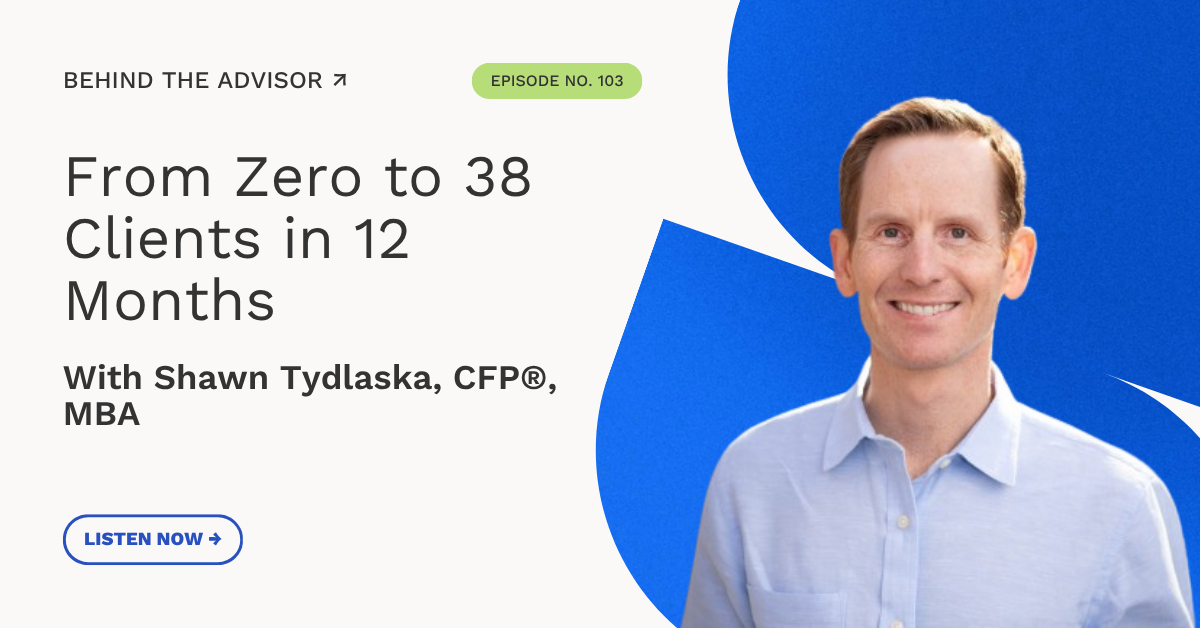
From Zero to 38 Clients in 12 Months
Oct 22, 2025
Starting a Firm From Scratch With No Experience
Starting a Firm From Scratch With No Experience
April 8, 2026
Scaling Your RIA
Scaling Your RIA
Feb 11, 2026